- Home
- Products
- About US
- Video
- Certification
- News
- Download
- FAQs
- Contact Us
Leave Your Message
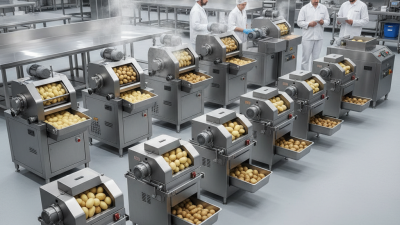
Choosing the right Boiled Potato Peeler Machine can improve consistency, speed, and kitchen hygiene. In busy food plants, small process delays quickly become costly. A reliable machine should remove skins evenly without crushing soft potatoes or wasting edible flesh. Texture matters.
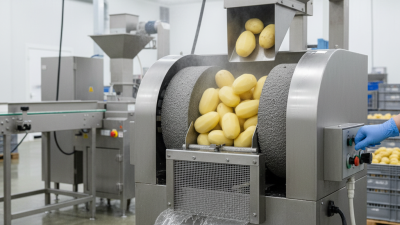
This guide examines ten machines available for sale, focusing on practical performance rather than attractive specifications alone. We consider peeling capacity, drum or roller design, water use, motor strength, cleaning access, and operator safety features. Stainless steel construction is valuable, especially where frequent washing and moisture exposure are unavoidable. We also look at controls, discharge systems, footprint, warranty support, and replacement parts. These details often decide whether a machine remains useful after months of daily production.
Real operating conditions can be less predictable. Potatoes vary in size, cooking time, moisture, and skin toughness. A model that performs well with firm potatoes may struggle with softer batches. No machine is perfect. This matters. Product descriptions may also omit noise levels, peeling loss, or cleaning time, so buyers should request demonstrations and clear technical data. The selections below are intended to support informed comparison, not promise identical results in every kitchen. By combining manufacturer information with practical evaluation points, this overview helps processors, caterers, and commercial kitchens identify equipment that suits their workload, space, budget, and quality expectations. Expect trade-offs. The best choice is usually the most balanced one.
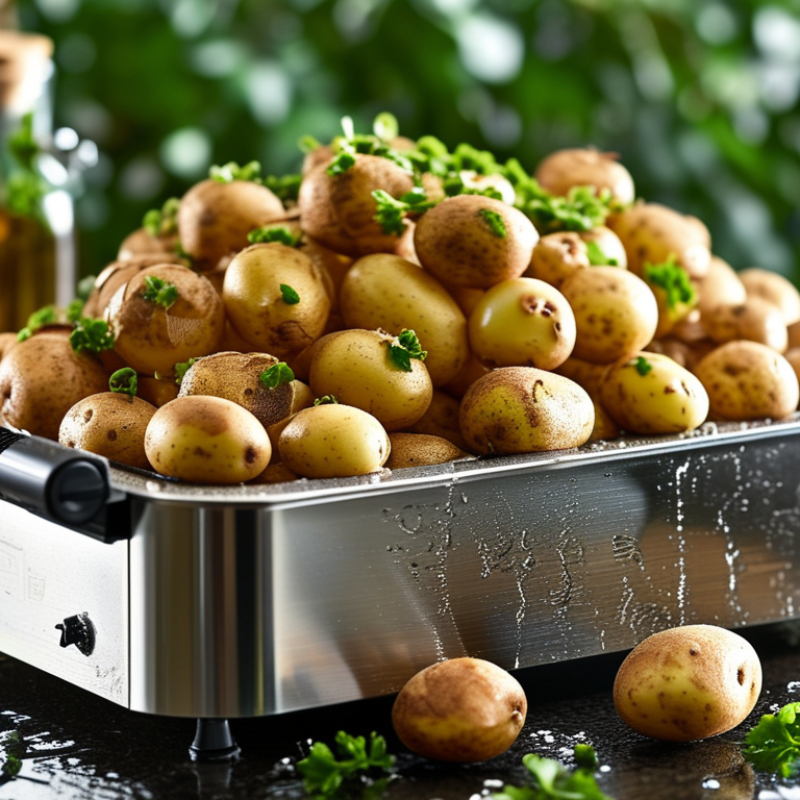
Global potato supply shapes the market for boiled potato peeler machines. FAOSTAT 2022 data records worldwide potato production at roughly 374 million tonnes. This figure includes table potatoes, processing crops, and production from many farming systems. It shows a large raw-material base, but it does not measure peeling demand directly.
Demand depends on factory size, labor costs, water access, and product quality targets. A frozen-food plant may need continuous peeling and stable throughput. A smaller caterer may prefer a compact machine with simple cleaning access. Boiled potatoes also require gentle handling, because over-peeling reduces usable yield and damages soft surfaces. Check drum capacity, peeling consistency, power requirements, safety features, and wastewater control before comparing machines for sale.
Numbers can mislead.
FAOSTAT reports agricultural output, not equipment purchases. Regional production may rise while machinery demand remains weak because farms sell unprocessed potatoes. Conversely, a smaller processing market may invest heavily in automation. In my assessment, buyers should match machine capacity with daily potato intake, not global production alone. Trial tests matter. Potato variety, skin thickness, moisture, and cooking method can change results. A machine that performs well in one plant may disappoint elsewhere. Keep supplier specifications, maintenance access, and realistic labor savings under careful review.
| Rank | Generic Machine Configuration | Peeling Principle | Typical Throughput | Operating Format | Recommended Application | FAOSTAT 2022 Potato Production Reference | Indicative Peeler Demand |
|---|---|---|---|---|---|---|---|
| 1 | Continuous Abrasive Roller Peeler | Abrasive rollers remove the skin while rotating and conveying potatoes through a water-assisted chamber. | 1,000–5,000 kg/h | Continuous | Large processors producing boiled, diced, sliced, frozen, or ready-to-eat potatoes. | China: approximately 95.6 million tonnes | Very High |
| 2 | Industrial Steam Peeling System | Short-duration high-pressure steam loosens the skin, followed by brushing or water separation. | 2,000–20,000 kg/h | Continuous | High-volume plants seeking low product loss and consistent peeling before boiling or further processing. | India: approximately 56.2 million tonnes | Very High |
| 3 | Batch Abrasive Drum Peeler | Rotating abrasive drum surfaces rub the skin away in timed batches. | 300–1,500 kg/h | Batch | Medium-sized food factories, institutional kitchens, and processors with variable production schedules. | Ukraine: approximately 20.9 million tonnes | High |
| 4 | Rotary Brush Peeler | Food-grade rotating brushes remove loosened skin with controlled water sprays. | 500–3,000 kg/h | Continuous | Boiled potato lines, catering kitchens, and plants requiring moderate capacity with gentle handling. | Russian Federation: approximately 18.1 million tonnes | High |
| 5 | Steam-and-Brush Integrated Peeler | Steam loosening is combined with rotary brushing and washing in one processing line. | 1,500–8,000 kg/h | Continuous | Large-scale production of boiled, chilled, frozen, and convenience potato products. | United States of America: approximately 17.8 million tonnes | High |
| 6 | Compact Abrasive Disc Peeler | A rotating abrasive disc peels potatoes through friction and controlled product movement. | 150–800 kg/h | Batch or semi-continuous | Small food processors, restaurants, hotels, hospitals, and central kitchens. | Germany: approximately 10.7 million tonnes | High |
| 7 | Water-Assisted Abrasive Peeling Line | Abrasive surfaces work with spray nozzles to remove skin and carry away peel residues. | 800–4,000 kg/h | Continuous | Processors that need integrated washing, peeling, and preparation before boiling. | Bangladesh: approximately 10.4 million tonnes | High |
| 8 | Small-Batch Steam Peeler | Controlled steam treatment softens the skin before manual or mechanical separation. | 100–600 kg/h | Batch | Specialty processors and smaller prepared-food operations requiring reduced peeling loss. | France: approximately 8.9 million tonnes | Medium to High |
| 9 | Multi-Stage Brush and Washer Peeler | Sequential brushing, washing, and inspection remove residual skin after primary peeling. | 600–3,500 kg/h | Continuous | Facilities requiring clean peeled potatoes for boiling, portioning, packaging, or chilled distribution. | Poland: approximately 6.2 million tonnes | Medium to High |
| 10 | Modular Peeling and Inspection Unit | Combines peeling, rinsing, visual inspection, and reject separation in configurable modules. | 300–2,000 kg/h | Batch or continuous | Flexible processors handling multiple potato sizes and product formats before boiling. | Netherlands: approximately 6.0 million tonnes | Medium to High |
Data note: Potato production figures are rounded 2022 national production estimates based on FAOSTAT Crops and Livestock Products data. Machine capacities are typical non-brand commercial specification ranges for generic equipment configurations; actual performance depends on potato variety, size distribution, moisture, peel thickness, loading rate, and target peel loss.
Source: FAOSTAT, Crops and Livestock Products database, Potato production, 2022: https://www.fao.org/faostat/en/#data/QCL