Leave Your Message

China Top 10 Frozen French Fries Machine Suppliers?

Choosing the right China Top 10 Frozen French Fries Machine Suppliers requires more than comparing online prices. A reliable supplier should demonstrate practical manufacturing experience, stable engineering, and clear after-sales support. This guide examines companies connected with potato processing lines, including washing, peeling, cutting, blanching, frying, de-oiling, and freezing equipment.

Details matter. A serious supplier should explain production capacity, potato size limits, cutting accuracy, oil temperature control, and freezing performance. Buyers should also inspect stainless steel grades, electrical components, sanitation design, and cleaning access. Factory videos are useful, but an independent visit or live video inspection provides stronger evidence. Ask for test-run footage using similar potatoes and target output.

Performance must be measurable.

The selected suppliers are assessed through product range, technical documentation, export experience, customer feedback, and response quality. Certifications may support credibility, but certificates should be verified with the issuing organization. Installation training, spare-part availability, warranty terms, and local service partners can strongly affect long-term operating costs.

No ranking is perfect. Supplier strengths can change with new projects, staff, and market conditions. Some companies may excel at compact restaurant equipment, while others specialize in high-capacity industrial lines. Therefore, this overview should guide further verification, not replace it. Before purchasing a Frozen French Fries Machine, request a detailed quotation, layout drawing, energy estimate, and acceptance criteria. A careful comparison can reduce downtime, product waste, and unexpected maintenance expenses.
China Top 10 Frozen French Fries Machine Suppliers?

What Are Frozen French Fries Machines and How Do They Work?

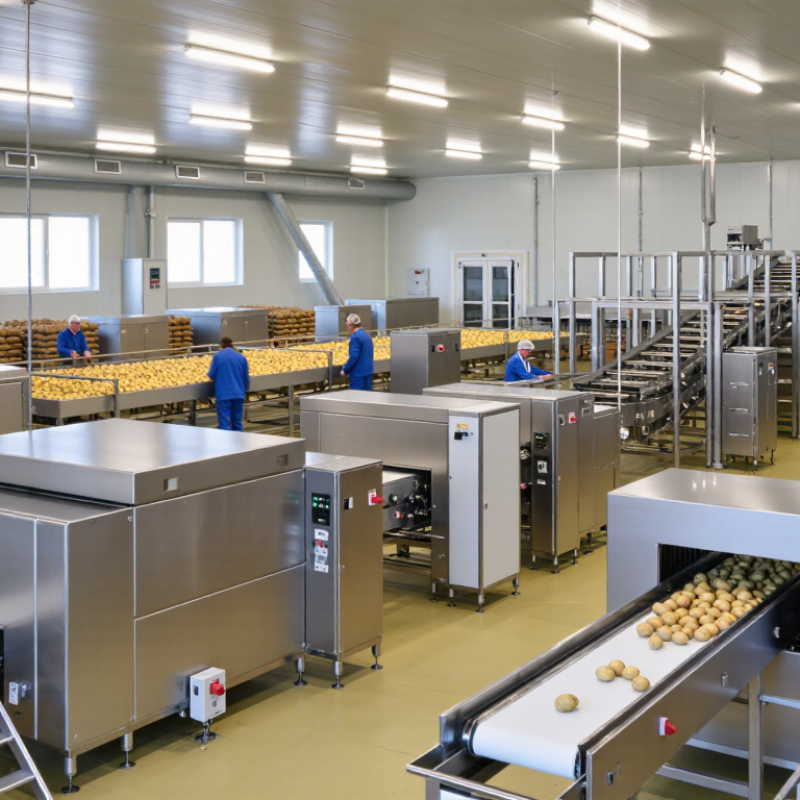
Frozen French fries machines are not one single box. They form a connected processing line for turning fresh potatoes into stable, ready-to-cook products. The equipment usually includes washing, peeling, cutting, blanching, drying, freezing, and packing units. Each stage affects the final bite. A small change in potato moisture can create soft fries instead of crisp ones.

The process begins with water cleaning and mechanical peeling. A cutter then shapes potatoes into uniform strips, often between 8 and 12 millimeters wide. Blanching briefly heats the strips to control surface starch and improve color. After cooling, vibration screens and air knives remove excess water. This step matters more than many new operators expect. Wet fries freeze poorly and may stick together.

A fast freezer then lowers the product temperature, commonly through circulating cold air. Individual strips should freeze separately rather than forming a solid block. Sensors monitor air temperature, belt speed, and product load. The fries are later weighed and sealed in moisture-resistant bags. Good machines allow easy cleaning and adjustment, while poor layouts create hidden residue and maintenance delays. In practice, no setting is perfect. Potato variety, harvest age, and room humidity can change results. That assumption can fail. Careful testing, trained operators, and clear maintenance records make the line more reliable than impressive specifications alone.
How to Evaluate China’s Frozen French Fries Machine Suppliers

Evaluating China’s frozen French fries machine suppliers requires more than comparing catalog prices. Review their experience with complete processing lines, not only individual machines. Ask how they handle washing, cutting, blanching, frying, freezing, and packaging. A supplier with process knowledge can identify weak points before installation. Request production data from potatoes similar to yours. Small differences in variety, moisture, and size can change the final texture.

Inspect the machine closely. Food-contact parts should use suitable stainless steel, with smooth welds and easy-clean surfaces. Check cutting accuracy, oil temperature control, freezer performance, insulation, and electrical safety. Ask for factory acceptance testing using your product specifications. Live testing is stronger than edited videos. Still, test results may not reflect your local conditions. That needs discussion.

Evaluate technical support as carefully as the equipment. Confirm installation methods, training hours, spare-parts availability, and response times. Ask for clear drawings, maintenance schedules, and a written warranty. Contact several existing customers, preferably facilities with similar output. Independent inspection can reveal poor wiring, weak seals, or unfinished surfaces. I would also compare the full ownership cost, including freight, utilities, labor, and replacement parts. A low quotation can be misleading. I have seen buyers focus on capacity claims and overlook cleaning time. That mistake deserves reflection before signing.

How to Evaluate China’s Frozen French Fries Machine Suppliers

This procurement framework assigns a 100-point evaluation weight to the factors most relevant to frozen French fries processing equipment. Food safety compliance, production capacity, temperature control, energy efficiency, after-sales support, and customization should be assessed through certificates, machine testing, technical specifications, and service agreements rather than company name recognition alone.

Profiles of China’s Top 10 Frozen French Fries Machine Suppliers

China Top 10 Frozen French Fries Machine Suppliers

China’s top ten frozen French fries machine suppliers represent different production strengths. Some focus on compact lines for small factories. Others build complete systems for high-volume processing. Their profiles usually include washing, peeling, cutting, blanching, drying, frying, freezing, and packaging equipment.

Several suppliers provide stainless-steel processing sections with adjustable cutting sizes. Some offer spiral freezers, while others specialize in continuous fryers and oil filtration units. Experienced manufacturers can modify conveyor widths, heating systems, and control panels for local production conditions. Export experience also matters. Reliable suppliers should provide installation guidance, spare parts, electrical documents, and operator training. I have found that response speed often reveals more than a polished catalogue.

Tips: Ask for product samples, factory videos, layout drawings, and recent customer references. Confirm hourly capacity under real potato conditions. A line rated at ten tons may perform differently with smaller potatoes, higher moisture, or limited cooling space. Check cleaning access carefully. Hidden corners can create maintenance problems. Energy consumption deserves attention too, although suppliers sometimes present incomplete figures.

The strongest profiles combine practical engineering with dependable after-sales support. One supplier may offer excellent cutting accuracy but limited freezing options. Another may provide advanced automation but require higher technical skills. This trade-off is easy to overlook. Buyers should compare blade life, oil temperature control, freezer efficiency, warranty terms, and commissioning support before choosing a suitable partner.

How to Compare Machinery, Capacity, Quality, and Service

China Top 10 Frozen French Fries Machine Suppliers?

How to Compare Machinery, Capacity, Quality, and Service

When comparing frozen French fries machine suppliers in China, begin with product fit. A small restaurant needs different equipment from an industrial processing plant. Review cutting size, washing method, blanching control, frying temperature, and freezing performance. Ask whether the supplier can provide test samples using your potato variety. A 500 kg/h claim may describe ideal conditions, not daily production. Capacity needs context.

Quality should be checked through evidence, not polished photographs. Request material certificates, electrical component details, weld inspection records, and videos of complete production lines. Stainless steel surfaces should be smooth, with no sharp corners or difficult cleaning areas. Ask about oil filtration, temperature stability, and automatic alarms. These details affect product color, texture, and food safety. A factory visit helps, but it does not prove everything.

Service often separates a useful supplier from a risky purchase. Confirm installation support, operator training, spare-part availability, warranty terms, and remote troubleshooting hours. Ask for a written response-time commitment. I prefer suppliers who explain limitations clearly. That feels more reliable than exaggerated promises. One warning: low prices can hide missing conveyors, weak insulation, or expensive replacement parts. A comparison table should include energy use, labor needs, delivery time, and maintenance costs. My own evaluations have sometimes favored a slower line because it produced steadier fries. The “best” machine is not always the fastest.

China Top 10 Frozen French Fries Machine Suppliers? - How to Compare Machinery, Capacity, Quality, and Service
Rank Anonymous Supplier Profile Typical Line Capacity Recommended Plant Scale Compatible Fry Sizes Core Processing Configuration Freezing System Finished Product Temperature Food-Contact Materials Electrical Standard Quality & Safety Documentation Typical Lead Time Warranty Practice After-Sales Support Overall Comparison Score
1 Supplier Profile A 1,000–3,000 kg/h Large industrial plants 7×7, 9×9, 10×10, 12×12 mm Washing, peeling, cutting, blanching, drying, frying, de-oiling, freezing IQF fluidized-bed freezer ≤ −18°C SUS 304 stainless steel; SUS 316 available for selected sections 380 V / 50 Hz / 3 Ph configurable CE documentation; HACCP-oriented design; material certificates available on request 90–150 days 12 months for major equipment Remote commissioning, installation guidance, spare-parts support 9.2/10
2 Supplier Profile B 500–2,000 kg/h Medium to large plants 7×7, 10×10, 12×12 mm Continuous washing, peeling, cutting, blanching, drying, frying and freezing IQF belt or fluidized-bed freezer ≤ −18°C SUS 304 stainless steel 380 V / 50 Hz / 3 Ph configurable CE files; electrical drawings; user manuals; factory acceptance testing available 75–120 days 12 months Video training, commissioning support and standard wear-part lists 8.9/10
3 Supplier Profile C 300–1,500 kg/h Small to medium plants 7×7, 9×9, 10×10 mm Batch or semi-continuous washing, cutting, blanching, drying and frying Compact IQF freezer or cold-room freezing solution ≤ −18°C SUS 304 stainless steel 380 V / 50 Hz / 3 Ph configurable Basic CE documentation; process flow and cleaning instructions 60–100 days 12 months Online troubleshooting and replacement-part sourcing 8.5/10
4 Supplier Profile D 800–2,500 kg/h Medium to large plants 7×7, 9×9, 12×12 mm Integrated line with optical sorting option and continuous fryer Fluidized-bed IQF freezer ≤ −18°C SUS 304; selected product-contact parts in SUS 316 380 V / 50 Hz / 3 Ph configurable CE documentation; electrical schematics; FAT and SAT support available 90–135 days 12 months On-site installation available at additional cost 8.8/10
5 Supplier Profile E 200–800 kg/h Start-ups and pilot production 7×7, 10×10 mm Modular washing, cutting, blanching, drying and batch frying line Small IQF freezer or blast freezer ≤ −18°C SUS 304 stainless steel 220 V or 380 V / 50 Hz configurable Basic technical file; operating and maintenance manual 45–80 days 12 months Remote installation assistance and operator training 8.1/10
6 Supplier Profile F 500–1,800 kg/h Medium-scale processors 7×7, 9×9, 10×10, 12×12 mm Continuous blanching, mechanical drying, frying and freezing IQF mesh-belt freezer ≤ −18°C SUS 304 stainless steel 380 V / 50 Hz / 3 Ph configurable CE documentation; cleaning validation guidance; spare-parts catalogue 70–110 days 12 months Commissioning by video; optional local service partner 8.4/10
7 Supplier Profile G 1,000–2,500 kg/h Export-oriented industrial plants 7×7, 9×9, 12×12 mm Automated line with PLC control, continuous fryer and IQF freezing Fluidized-bed IQF freezer ≤ −18°C SUS 304 stainless steel 380 V / 50 Hz / 3 Ph configurable CE files; PLC program backup; process and utility diagrams 90–140 days 12 months Remote PLC support and planned spare-parts packages 8.7/10
8 Supplier Profile H 300–1,200 kg/h Small to medium plants 7×7, 10×10, 12×12 mm Compact continuous line with optional automatic packaging Compact IQF freezer ≤ −18°C SUS 304 stainless steel 380 V / 50 Hz / 3 Ph configurable CE documentation; basic factory inspection report 55–95 days 12 months English manuals, remote training and online service 8.0/10
9 Supplier Profile I 600–2,000 kg/h Medium-scale commercial production 7×7, 9×9, 10×10 mm Washing, abrasive peeling, cutting, blanching, drying and frying IQF belt freezer ≤ −18°C SUS 304 stainless steel 380 V / 50 Hz / 3 Ph configurable CE files; equipment layout; utility consumption data 70–120 days 12 months Technical support during installation and commissioning 8.3/10
10 Supplier Profile J 150–600 kg/h Small factories and restaurants 7×7, 9×9, 10×10 mm Individual machines or flexible semi-automatic production line Blast freezer or compact IQF freezer ≤ −18°C SUS 304 stainless steel 220 V or 380 V / 50 Hz configurable Basic technical documentation; operating instructions 40–75 days 12 months Email support and standard spare-parts service 7.8/10
Capacity figures are typical specification ranges for frozen French fries processing equipment and depend on potato variety, raw-material size, cutting specification, moisture content, blanching recipe, frying conditions and final product requirements. Confirm actual throughput, energy consumption, certification documents, installation scope and after-sales terms through a formal technical quotation and factory acceptance test.

How to Select the Right Chinese Supplier for Your Factory

Selecting a Chinese frozen French fries machine supplier requires more than comparing quotations. FAOSTAT records global potato production above 370 million tonnes in recent years, creating strong demand for reliable processing equipment. The frozen potato market is also expanding, with Grand View Research reporting steady growth through 2030. Your supplier must understand factory conditions, not only sell standard machinery.

Request a complete process layout, including washing, peeling, cutting, blanching, drying, frying, freezing, and packing. Check product-contact materials, temperature controls, oil filtration, and cleaning access. Ask for actual test records using your potato variety, cut size, and target capacity. A supplier claiming 5 tonnes per hour may measure input weight, not finished frozen output. That difference matters.

Inspect the supplier’s quality system, welding details, spare-parts list, and commissioning plan. ISO 9001 certification can support reliability, but it does not replace factory audits or acceptance testing. Request videos from operating installations and speak with independent customers where possible. Energy use deserves attention; compare steam, water, refrigeration, and oil consumption per tonne.

My first mistake would be trusting a polished catalog too quickly. A low quotation can hide weak insulation, unstable controls, or expensive replacement parts. Leave room for doubt. Use a signed technical specification, staged payments, and clear performance standards before production begins.