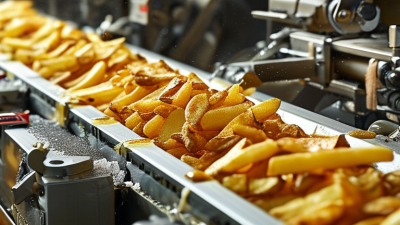
Choosing the right French Fries Deep Fryer Machine supplier requires more than comparing prices and polished product photos. Worldwide buyers must examine frying capacity, heating efficiency, oil filtration, temperature control, cleaning access, and after-sales support. A machine that performs well in a factory kitchen may not suit a restaurant with limited space.
Real operating experience matters. Suppliers should provide clear specifications, installation guidance, maintenance schedules, and references from comparable businesses. Ask about stainless-steel grade, basket design, conveyor speed, safety controls, and expected oil consumption. These details affect crispness, production consistency, labor costs, and daily reliability.
Small details matter.
This guide introduces leading suppliers serving different regions and production scales. It considers manufacturing experience, technical expertise, certifications, customization options, spare-parts availability, and service responsiveness. Independent testing remains important, because catalog figures may not reflect actual performance with different potato varieties or coating systems.
No supplier is perfect. Some companies offer excellent engineering but limited local support. Others provide competitive pricing yet disclose less technical information. Delivery times, voltage requirements, operator training, and warranty conditions also deserve careful review. A useful comparison should recognize these weaknesses rather than hide them.
Buyers can use this overview to build a practical shortlist, request accurate quotations, and arrange product demonstrations. The final choice should match real output targets, available floor space, energy conditions, and long-term maintenance capability. The best supplier is not always the largest. It is the one that reliably supports the complete frying process.
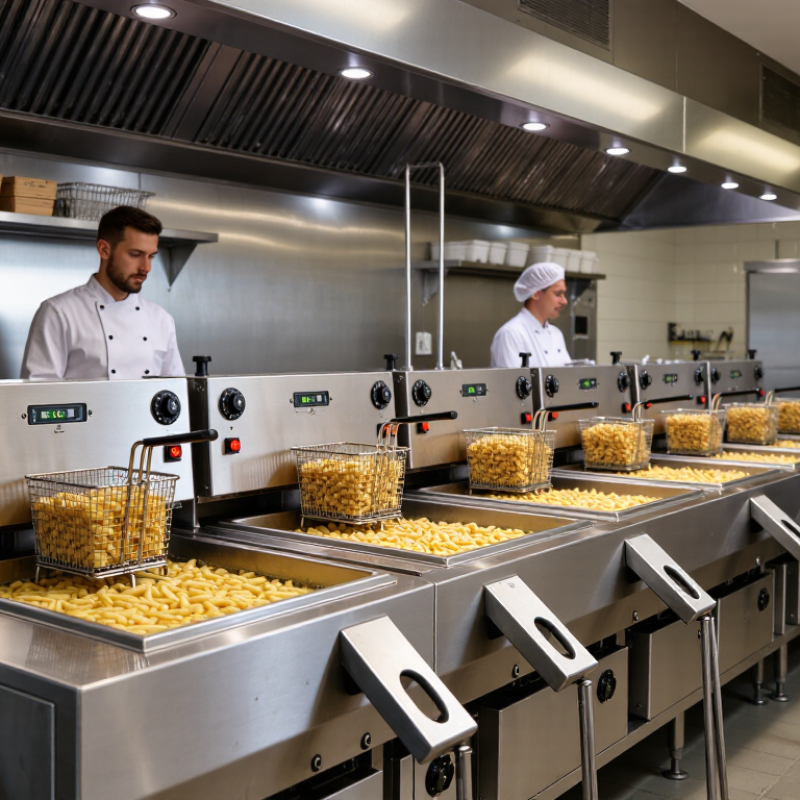
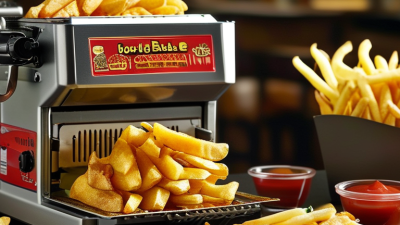
A French fries deep fryer machine is commercial equipment designed to cook potato strips in hot edible oil. It provides controlled heating, steady oil circulation, and consistent frying results. Depending on production needs, the machine may use batch frying or a continuous conveyor system. Continuous models suit large processing lines, while batch fryers work well for smaller kitchens and flexible menus.
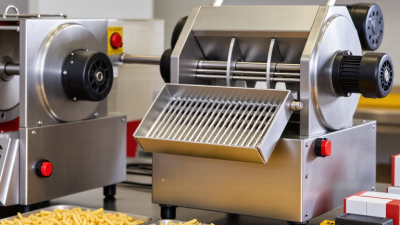
The main components usually include a stainless-steel frying tank, heating system, oil filtration unit, temperature controls, and discharge conveyor. Some systems also support automatic oil-level monitoring.
In practical use, operators must match frying temperature with potato variety, strip size, and moisture content. A temperature that is too low creates greasy fries. Excessive heat may darken the surface before the center becomes tender.
No machine is perfect. Cleaning habits still affect quality, energy use, and equipment life.
Tips: Check temperature accuracy with an independent thermometer. Ask suppliers about filtration speed, usable oil volume, cleaning access, and replacement parts. Test the machine with your actual potato strips before ordering. This small step can reveal uneven browning or unexpected oil consumption. Also inspect insulation and emergency shut-off controls. These details are easy to overlook. They matter during long production shifts.
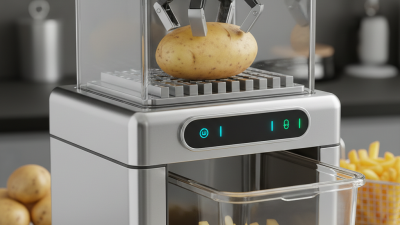
Commercial French fries fryers must deliver stable heat, safe handling, and consistent output during busy service. A reliable machine usually includes an accurate thermostat, insulated walls, and a strong stainless steel tank. These features help maintain oil temperature when frozen potatoes enter the basket.
Look for separate frying zones when different products need different temperatures. A cold zone below the heating element can collect crumbs and reduce burnt flavors. Removable tanks and accessible filters make daily cleaning easier. Operators should also check basket capacity, recovery time, drain design, and electrical or gas requirements before purchasing. In real kitchens, a fryer with impressive capacity may still cause delays if the oil drains slowly. That detail is easy to miss.
Tips: Test temperature recovery with a full basket, not an empty tank. Keep a simple cleaning log. Inspect handles, seals, and emergency shut-off controls each day. Ask suppliers for clear manuals, spare-part availability, and service response details. Energy efficiency matters, but it should not weaken heating performance or safety. Some buyers focus too heavily on price and later face higher oil use, uneven color, or difficult maintenance. A practical trial with actual potato portions often reveals more than a specification sheet.
Typical oil-capacity ranges for common commercial fryer configurations used in restaurants, hotels, catering kitchens, and food-production facilities.
Countertop fryers generally suit small-volume service, while floor-standing and twin-vat models provide greater batch capacity. Continuous fryers use substantially more oil and are designed for high-throughput production. Commercial purchasing decisions should also consider thermostatic temperature control, filtration, stainless-steel construction, safety cut-off systems, and energy efficiency.
French fries fryer suppliers vary widely by region, equipment scale, and service capability. European suppliers often focus on energy efficiency, stainless steel construction, and strict process control. Their systems may include automatic oil filtration, temperature monitoring, and conveyor-based frying. These features suit large factories serving consistent retail demand.
North American suppliers commonly provide modular fryers for industrial plants and foodservice operations. Buyers can often request different belt widths, oil capacities, and cleaning systems. In East Asia, suppliers frequently offer flexible production lines with competitive pricing and practical customization. Some factories support rapid installation, but technical documentation may require closer review. No supplier is perfect.
South Asian and Middle Eastern suppliers often understand regional demand for compact, durable equipment. Their machines may work well for medium-sized processors and growing restaurant groups. Latin American suppliers can be attractive when local service and shorter delivery routes matter. African buyers should examine spare-parts availability, operator training, and power compatibility before ordering. A fryer may look impressive in a showroom, yet perform poorly with unstable voltage or inconsistent potato quality.
From my experience, reliable evaluation starts with production tests using the buyer’s potato variety, moisture level, and target output. Ask for oil temperature records, cleaning procedures, safety certificates, and real installation references. A supplier should explain heat recovery, filtration intervals, and expected maintenance costs clearly. Claims about capacity need practical verification. That step is sometimes skipped, and it creates expensive surprises later.
| Global Region | Key Supplier Markets | Common Fryer Formats | Typical Throughput Range | Typical Oil Temperature | Common Heating Systems | Typical Construction | Food-Safety & Compliance Features | Typical Delivery Profile | Best-Fit Applications |
|---|---|---|---|---|---|---|---|---|---|
| Western Europe | Germany, Italy, France, the Netherlands, Belgium, Spain and the United Kingdom | Continuous fryers, batch fryers, pressure fryers and integrated potato-processing lines | Approximately 50–3,000 kg/h, depending on fryer size and line configuration | Approximately 160–185°C for potato frying | Gas-fired heat exchangers, electric immersion heating and thermal-oil systems | Food-grade stainless steel, commonly AISI 304; AISI 316 may be specified for selected wet or corrosive areas | Hygienic design, oil filtration, temperature control, emergency shut-off, guarding and documentation for CE-marked equipment | Commonly 8–24 weeks for standard equipment; custom lines generally require longer engineering time | Frozen French fries, chilled fries, foodservice production and medium-to-large industrial plants |
| North America | United States, Canada and Mexico | Batch fryers, continuous fryers, pressure fryers and turnkey processing systems | Approximately 45–2,500 kg/h for commercial and industrial configurations | Approximately 160–185°C, with automatic oil-temperature regulation | Natural gas, propane, electric heating and thermal-fluid heating | Stainless-steel cooking vessels, insulated frames and removable components for sanitation | Temperature alarms, oil-quality monitoring, filtration, interlocked guards and designs aligned with applicable NSF, UL or local electrical requirements | Commonly 10–26 weeks, subject to factory capacity, controls and installation scope | Quick-service restaurants, institutional kitchens, processors and high-volume frozen-food plants |
| East Asia | China, Japan, South Korea and Taiwan | Compact batch fryers, continuous fryers, automatic frying lines and modular processing equipment | Approximately 30–2,000 kg/h, with a broad range of compact and industrial models | Approximately 160–185°C for standard potato products | Electric, gas-fired and thermal-oil heating systems | Stainless-steel contact surfaces, modular frames and automated conveyor assemblies | Programmable controls, oil filtration, temperature sensors, safety interlocks and export-oriented electrical configurations | Commonly 6–20 weeks for standard models; complete lines may require additional commissioning time | Restaurant kitchens, central kitchens, snack manufacturers and export-oriented food processors |
| South Asia | India, Pakistan, Bangladesh and Sri Lanka | Batch fryers, semi-automatic continuous fryers and compact commercial frying systems | Approximately 20–1,000 kg/h, depending on automation and oil-management configuration | Approximately 160–185°C, generally controlled by thermostat or PLC | Electric and gas-fired heating, with some thermal-oil options for larger lines | Stainless-steel frying tanks, insulated panels and manually or automatically operated conveyors | Drainable tanks, oil filtration options, emergency controls and stainless-steel food-contact surfaces | Commonly 4–16 weeks for standard machines; installation and operator training may be arranged separately | Small and medium snack plants, restaurants, catering kitchens and regional frozen-food production |
| Southeast Asia | Thailand, Vietnam, Malaysia, Indonesia, the Philippines and Singapore | Batch fryers, continuous fryers and integrated systems for frozen and snack products | Approximately 30–1,500 kg/h for commercial and industrial equipment | Approximately 160–185°C, with controls selected for continuous production | Electric, LPG, natural gas and thermal-oil heating | Corrosion-resistant stainless steel, insulated cooking chambers and washdown-compatible components | Oil filtration, automatic temperature control, hygienic drainage, safety interlocks and export documentation | Commonly 6–18 weeks, plus shipping and site-installation requirements | Frozen-food factories, contract food manufacturers, central kitchens and restaurant chains |
| Middle East | Türkiye, the United Arab Emirates, Saudi Arabia, Israel and Jordan | Continuous fryers, batch fryers and high-capacity systems for potato and snack processing | Approximately 50–2,000 kg/h, with larger capacities available for turnkey projects | Approximately 160–185°C, with oil circulation and heat recovery options | Gas-fired, electric and thermal-oil heating systems | Stainless-steel construction with enhanced insulation and equipment designed for demanding ambient conditions | Oil filtration, automatic controls, emergency shut-off, hygienic access points and region-specific electrical requirements | Commonly 8–24 weeks, depending on import procedures, utilities and commissioning scope | Large foodservice operations, snack factories, frozen-potato processors and institutional catering |
| Africa | South Africa, Egypt, Morocco, Kenya, Nigeria and other regional manufacturing hubs | Batch fryers, semi-continuous fryers and modular commercial frying systems | Approximately 20–800 kg/h for commonly deployed commercial and small-industrial equipment | Approximately 160–185°C, subject to product moisture and cut size | Electric, LPG, diesel-fired or natural-gas systems, depending on local utilities | Stainless-steel frying tanks with robust frames and serviceable components | Thermostatic control, oil-drain systems, filtration options, guarding and accessible cleaning points | Commonly 6–20 weeks, with freight, utilities and local technical support affecting the schedule | Restaurants, hotels, catering companies, snack producers and growing frozen-food operations |
| Latin America | Brazil, Argentina, Colombia, Chile, Peru and Mexico | Batch fryers, continuous fryers and modular lines for potato and snack products | Approximately 30–1,500 kg/h, depending on automation level and product specification | Approximately 160–185°C, with automatic or semi-automatic regulation | Gas-fired and electric heating, with thermal-oil systems for larger installations | Food-grade stainless steel, insulated tanks and conveyor systems designed for washdown | Oil filtration, programmable temperature controls, emergency stops and sanitation-oriented drainage | Commonly 8–22 weeks, excluding customs clearance and site preparation | Fast-food chains, foodservice distributors, snack factories and frozen French-fry processors |
| Oceania | Australia and New Zealand | Commercial batch fryers, continuous fryers and imported industrial potato-processing lines | Approximately 40–1,500 kg/h for commercial and industrial applications | Approximately 160–185°C, with accurate digital temperature control | Electric, natural gas and LPG heating systems | Stainless-steel construction with strong emphasis on cleanability and service access | Hygienic design, oil filtration, temperature limiting, safety cut-outs and compliance with applicable local electrical and workplace-safety requirements | Commonly 10–28 weeks because many industrial systems are imported or built to order | Hotels, restaurants, institutional kitchens, foodservice commissaries and processors |
When comparing French fries deep fryer machine suppliers worldwide, start with usable capacity, not the advertised oil volume. A 12-liter tank may hold less food after allowing space for baskets and safe oil movement. In a busy kitchen, one 24-liter fryer can be slower than two 12-liter units. I learned this after measuring recovery time between batches. The larger tank looked efficient, but it created longer queues during peak service.
Energy use needs practical testing. Ask suppliers for power ratings, heat-up time, and recovery performance at a stated load. A fryer using 18 kilowatts may produce more portions per hour than a smaller 12-kilowatt model. Compare energy per kilogram of finished fries, not only hourly electricity. Insulated tanks, accurate thermostats, and automatic idle modes can reduce waste. However, supplier figures may come from ideal conditions. A spreadsheet can still mislead.
Safety details deserve equal attention. Check for stable feet, cool-touch handles, protected heating elements, and an accessible emergency shutoff. Temperature control should limit overheating and reduce burnt oil risks. Look for clear oil-drain procedures and removable parts that staff can clean without awkward lifting. Ask whether testing covers electrical safety, heat exposure, and food-contact materials. Request manuals, maintenance intervals, and service response times before ordering. Small omissions matter. A fryer that is powerful but difficult to clean may increase downtime and staff errors. Supplier answers should be specific, documented, and consistent across the quotation, technical sheet, and demonstration.
When comparing top French fries deep fryer machine suppliers worldwide, start with your actual service pattern. A busy counter needs stable recovery after each basket. The U.S. ENERGY STAR Commercial Fryers specification reports that qualified models can use about 30% less energy than standard units. That difference matters during long shifts. Ask suppliers for measured oil temperature recovery, hourly output, oil capacity, and tested energy consumption. Do not rely on brochure capacity alone.
For foodservice operations, filtration quality and cleaning access deserve close inspection. Crumbs left in cold zones can darken oil and change flavor. The FDA Food Code 2022 emphasizes temperature control, equipment cleanliness, and safe food-contact surfaces. Check whether the fryer supports your local gas pressure, voltage, ventilation system, and safety certification. Imported equipment may require costly electrical changes. Small details hurt.
Industrial buyers should calculate total ownership cost, not only the invoice price. Review heating element life, oil usage, spare-part availability, warranty response, and technician coverage across your region. The U.S. Department of Energy test procedures provide a useful framework for comparing commercial fryer efficiency. Still, laboratory efficiency may not match a crowded production line. Request a live trial with your potatoes, coating, basket load, and target temperature. A cheaper machine can become expensive through slow recovery, uneven color, or frequent oil replacement. I would also document cleaning time. It is often underestimated.