Leave Your Message

How to Choose the Best Automatic Potato Cutter?

Choosing an Automatic Potato Cutter starts with the work it must handle each day. A small café preparing a few trays needs different capacity from a busy food-production kitchen. Estimate your usual volume, peak-hour demand, and available counter or floor space before comparing machines. Guesswork can make an impressive cutter a poor fit.

Look closely at the cuts it can produce, such as fries, wedges, or cubes, and check whether the blade options suit your menu. Consider the feed opening, operating steps, and how easily staff can remove parts for cleaning. Details matter. A durable frame and clearly described food-contact materials are useful signs, but they do not replace a close inspection of the machine’s build and documentation. Check the manufacturer’s instructions for cleaning, blade handling, and routine maintenance.

Compare rated output with your real workload, not just the largest number in a product listing. Ask suppliers about operating limits, spare blades, warranty coverage, and service response times. A live demonstration can reveal whether potatoes feed smoothly or need frequent repositioning. That takes time. It is also worth checking noise, stability, and the space required for safe loading. Reviews may help, but look for specific comments about long-term use rather than broad praise. No cutter is perfect; even a reliable model may require staff training or slower handling for irregular potatoes. The best choice balances output, cut consistency, cleaning effort, and dependable support for your actual kitchen.
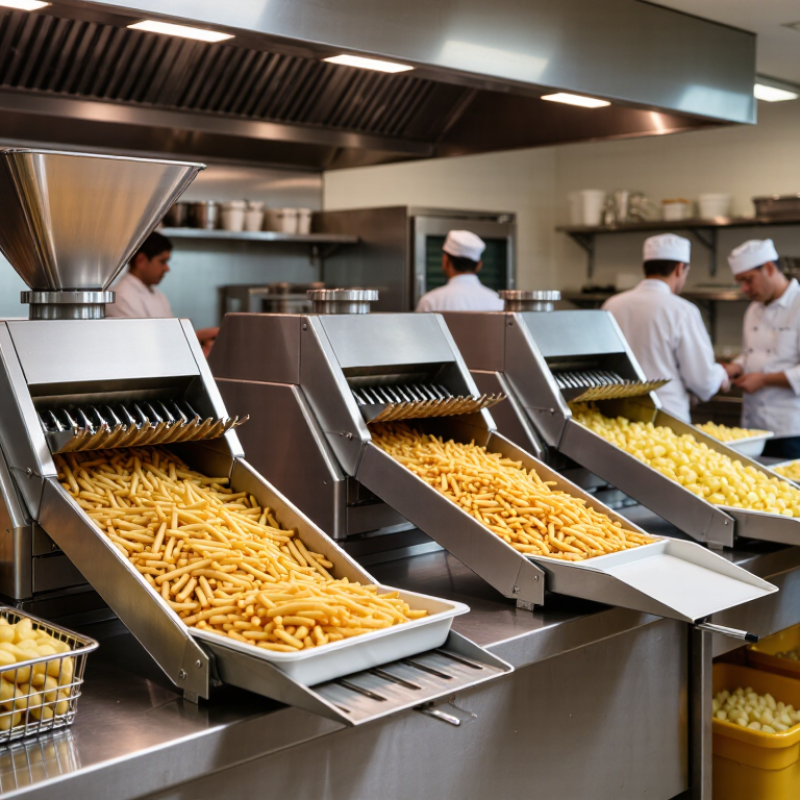
How to Choose the Best Automatic Potato Cutter?

Types and Operating Principles of Automatic Potato Cutters

Automatic potato cutters generally work in three ways: batch pushing, rotary slicing, or continuous feeding. A batch cutter holds whole potatoes in a chamber. A powered ram pushes them through a fixed blade grid, producing sticks or cubes in one stroke. The grid’s spacing sets the cut size. It is simple to understand, though uneven potatoes can jam or produce inconsistent pieces. The difference is practical.

Rotary cutters use a spinning disc or drum to slice potatoes as they pass the blades. Changing blade shape or disc speed affects thickness, but faster operation may increase bruising. Continuous-feed machines move potatoes along a belt or chute toward rotating knives, helping maintain steady output for larger batches. In each type, feed rate, potato size, and blade sharpness influence the result. A capacity rating is only a starting point; real output changes when operators need to refill the hopper or clear residue. Before choosing, check whether the machine handles the cut shapes you need and how easily its blades can be removed for cleaning. A small caveat: product descriptions may not show how a cutter performs with irregular, freshly washed potatoes. Testing a typical batch can reveal more than a headline speed.

How to Choose the Best Automatic Potato Cutter? - Types and Operating Principles of Automatic Potato Cutters

Cutter type Typical cut Operating principle Best suited for Key selection considerations
Rotary slicing cutter Round or oval slices A feed system holds or guides the potato against a rotating blade. Slice thickness is generally determined by the blade position or cutting gap. Chips, gratins, and other products requiring uniform slices Check the available thickness adjustment, potato-size range, feed consistency, and how easily the blade can be removed for cleaning.
Grid-blade dicer Cubes or rectangular pieces Potatoes are pushed through intersecting blade grids. For consistent pieces, the product is commonly cut into slices or slabs before passing through a second grid. Soups, prepared meals, and further processing where diced pieces are needed Choose the grid opening to match the target piece size. Verify that the feed can handle the potato dimensions and that the grid can be cleaned safely.
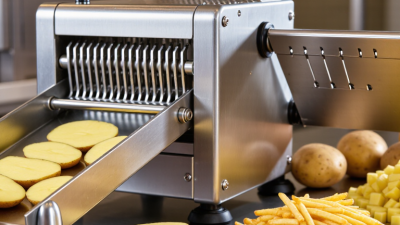
Strip or French-fry cutter Straight strips or sticks A knife grid separates a potato or potato slabs into parallel strips as a mechanical feed pushes the product through the blades. French fries and other stick-shaped potato products Match the blade-grid opening to the required strip dimensions. Consider potato length, feed alignment, blade sharpness, and the ease of changing grids.
Multi-purpose interchangeable-blade cutter Slices, strips, or cubes, depending on the fitted blade assembly The machine uses interchangeable blades or cutting heads to produce different shapes. The feed mechanism may be continuous or batch-based, depending on the design. Operations that process more than one cut style Confirm which cutting heads are included, how changeovers are performed, and whether the machine's feed and output capacity suit each product.
Continuous-feed industrial cutter Varies by installed cutting head A conveyor or powered feed moves potatoes continuously through a cutting assembly. The resulting cut depends on the blades and feed arrangement. Production lines requiring steady product flow Assess the required throughput, incoming product size, integration with upstream and downstream equipment, guarding, and cleaning access.

Choosing checklist: Define the required cut shape and dimensions first, then compare throughput, potato size range, feed method, changeover time, cleaning access, blade replacement, guarding, and compatibility with the rest of the processing line. Actual capacity and cut consistency depend on the machine design, potato size and condition, and operating setup.
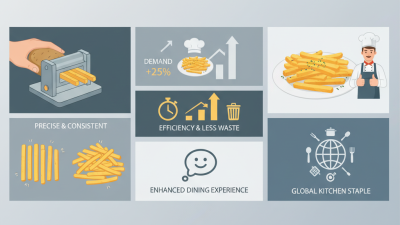
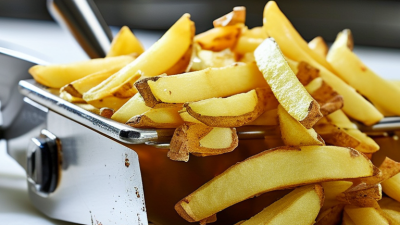
Key Features That Affect Cutting Performance

How to Choose the Best Automatic Potato Cutter?

Key Features That Affect Cutting Performance

Cutting performance depends on more than motor power. Blade sharpness, cutting geometry, and feed design work together. A sharp blade makes clean edges with less crushing. Check whether the machine offers interchangeable blades for fries, slices, or cubes. The cut should stay consistent across several potatoes, not just one. Test it.

Feed openings matter, too. A chute that fits typical potato sizes can reduce trimming and improve workflow. If potatoes need heavy pressure to move through, the cutter may be poorly matched to the task. Look for a stable frame and a firm base. Vibration can shift the machine and produce uneven pieces. Even a small wobble is worth noticing.

Speed is useful only when cuts remain uniform. Ask how easily the cutting thickness can be adjusted, and check that settings lock securely. Removable blade assemblies make cleaning and inspection easier, but they should reattach without play. Potato starch can build up quickly, especially around narrow slots. That detail is easy to underestimate. Compare output with the portion size you actually need, since a fast cutter may still create too many broken pieces. A brief test with firm and softer potatoes can reveal differences that a specification sheet will not.

Capacity, Speed, and Potato Size Compatibility

Capacity figures are useful, but they rarely tell the whole story. A machine rated for a certain number of kilograms per hour may process less when potatoes vary in shape or need frequent repositioning. Match its stated output to your busiest typical shift, not an unusually quiet day. Leave a little room. Real kitchens rarely feed potatoes at a perfectly steady pace.

Speed matters only when the cut remains consistent. Watch how quickly the cutter handles a small test batch, then inspect the pieces for uneven edges or crushed ends. A fast motor cannot fix a poorly matched cutting grid. Also consider loading and cleaning time; both affect how much product you actually prepare. That detail is easy to miss.

Potato size compatibility deserves a close look. Measure the potatoes you commonly buy, including a few unusually large ones, and compare them with the feed opening and cutting chamber. Long, narrow potatoes may feed differently from round ones. If the opening is tight, staff may need to trim potatoes before cutting, reducing the machine’s practical capacity. Ask whether different grid sizes are available for your preferred cut. A short trial with your own potatoes is more revealing than a specification sheet, though it can still miss the busiest hour.

Safety, Materials, and Cleaning Requirements

When choosing an automatic potato cutter, check how it keeps hands away from the blade. A fitted feed chute and food pusher help guide potatoes without reaching into the cutting area. Look for a stable base with nonslip feet; a cutter that shifts on a wet counter can be difficult to control. A blade guard or secure locking mechanism is useful during storage. Small potatoes can still slip, so size them to fit the chute rather than forcing them through.

Tips: Before use, place the cutter on a dry, level surface. Keep fingers clear of the feed opening, and switch off or unplug the unit before removing a jam. That extra pause can feel fussy, but it matters.

For materials, favor sturdy food-contact surfaces, such as stainless steel blades and durable housing that resists cracking. Check seams and blade mounts, where residue can collect or parts can loosen. “Dishwasher safe” should be confirmed in the product instructions, not assumed. Cleaning is easiest when food-contact parts detach without tools. Rinse them soon after cutting, wash with a small brush around blade edges, and dry thoroughly to limit rust or lingering odors. Avoid wiping blades toward your hand. Even a well-designed cutter needs careful handling, and the cleaning routine may be less convenient than the product photos suggest.

How to Choose the Best Automatic Potato Cutter

Safety, food-contact materials, and cleaning features to compare before buying.

Suggested buyer-priority ratings, not laboratory measurements or product test results. Prioritize blade guards and secure blade locking; then check that food-contact parts are suitable for food use and can be removed for thorough cleaning. Dishwasher compatibility varies by model, so follow the manufacturer’s instructions.

How to Compare Models for Your Kitchen or Business

Choosing an automatic potato cutter starts with the work it must handle. A home kitchen may need compact storage and quick cleanup more than high hourly output. A café or prep kitchen may need steady batches during busy periods. Compare the cut sizes each model offers, and check whether changing blades is simple. Small details matter. A loose chute or awkward latch can slow routine work.

Look at the materials around the cutting area and the way parts come apart for washing. Smooth surfaces and removable components can make cleanup easier, but check the manufacturer’s care instructions. Measure the machine on your counter, including room for loading potatoes and collecting cuts. Then consider power requirements and noise. A fast motor is not automatically a better fit. It may be louder or larger than your kitchen can comfortably accommodate.

For a business, ask how the cutter performs across a realistic batch, not just one potato. Potato size and firmness vary, so a showroom demonstration can make any machine look more consistent than daily use. I would not judge by speed alone. Test cut uniformity, stability, and the time needed to clean and reset the unit. There is no perfect scorecard. A model that saves minutes but creates extra washing may not save much time overall. Keep notes during a trial; small annoyances are easy to forget.