Choosing an Automatic Potato Cutter is not simply a matter of buying the fastest machine. In a busy kitchen, the wrong model can create uneven chips, wasted potatoes, and frustrating cleaning delays. A reliable choice begins with the products you actually prepare. Thick wedges, shoestring fries, and diced potatoes require different blade designs and feed openings. Measure your expected hourly volume. Then compare it with the cutter’s practical capacity, not only its advertised maximum.
I have found that stainless steel construction, stable feet, and removable food-contact parts matter every day. They support cleaner handling and make routine inspection easier. Check whether the blades can be sharpened or replaced without complicated service. Confirm that guards, switches, and emergency stops are clearly designed. A strong motor is useful, but excessive power may damage soft potatoes or increase operating costs. Small details matter.
Before purchasing, test representative potatoes, including different sizes and firmness levels. Observe the cut consistency, noise, vibration, and cleaning time. Ask the supplier for manuals, warranty terms, spare-part availability, and documented safety information. These details help separate dependable equipment from attractive marketing. No cutter is perfect. I once underestimated cleaning access, and the saved cutting time quickly disappeared afterward.
This guide explains how to compare capacity, cut quality, safety, sanitation, maintenance, and total value. It also highlights common selection mistakes. Choose a machine that fits your workflow, staff skills, and long-term production needs. The best Automatic Potato Cutter is not always the largest. It is the one that performs consistently when the kitchen is busy.
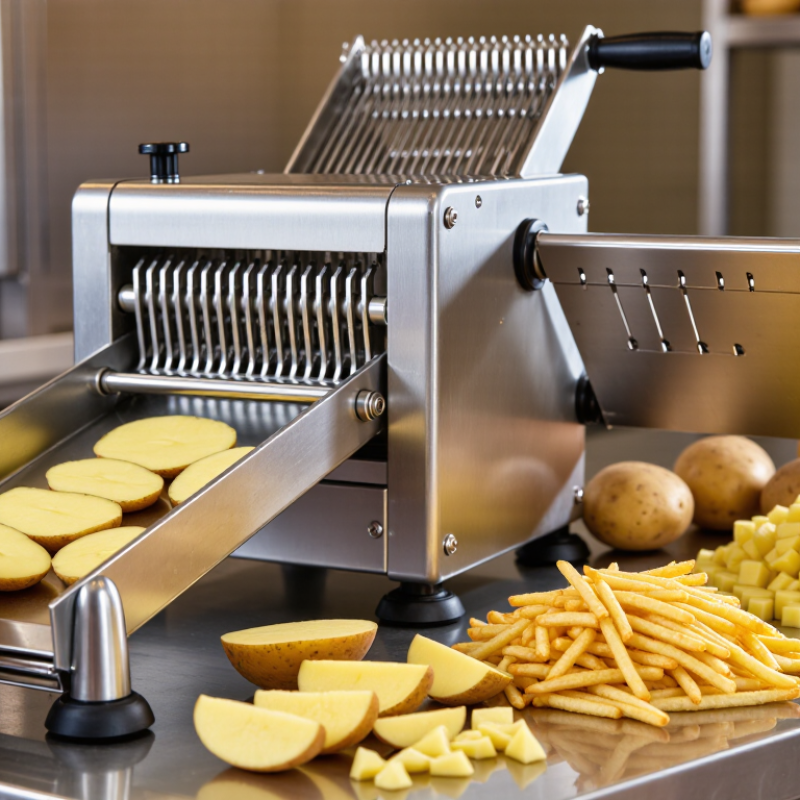
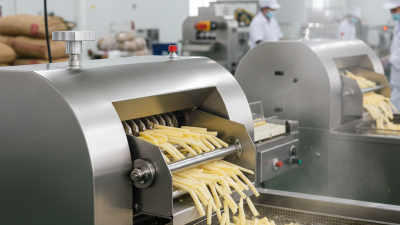
An automatic potato cutter is a food-processing machine that turns whole, washed potatoes into consistent pieces with limited hand labor. Its main parts are a feed hopper, drive motor, cutting chamber, blade set, and outlet chute. Some models include sensors that pause the motor when the cover opens. This detail matters around moving blades. The machine does not “understand” potato size; it relies on physical guides and steady feeding. That limitation is easy to overlook. Small errors matter.
After potatoes enter the hopper, a pusher or rotating mechanism moves them toward the blades. A grid may create fries, while a slicing disc produces rounds or wedges. The motor supplies the force, and the frame keeps the cutting path stable. Cut pieces fall through the outlet into a tray or container. In practical use, clean, similarly sized potatoes feed more smoothly. Mud, stones, or overly soft potatoes can reduce accuracy and increase cleaning time. I have found that feed speed often affects consistency as much as blade sharpness.
When choosing an automatic potato cutter, check its hourly capacity, cut dimensions, adjustment method, and cleaning access. Stainless food-contact surfaces are useful, but surface quality alone does not prove reliable hygiene. Cleaning matters. Look for removable blades, guarded openings, clear instructions, and overload protection. Confirm that the machine suits your available power supply and workspace. Ask how easily replacement blades can be inspected and fitted. A higher output is not always better. For a small kitchen, a compact machine with slower feeding may create less waste and fewer uneven pieces. Measure real potatoes before deciding; specifications can sound precise, yet kitchen conditions are rarely so neat.
Choosing an automatic potato cutter starts with the work it must perform every day. A kitchen preparing thin fries needs different equipment from a factory producing wedges. Define the required cut first. Consider fries, cubes, slices, wedges, or spiral shapes. Potato size also matters. A machine designed for small potatoes may struggle with large, uneven ones.
Output level should match your busiest hour, not your average shift. For a small food service kitchen, a compact cutter handling 50 to 150 kilograms per hour may be enough. Larger processing lines may require several hundred kilograms per hour. However, advertised capacity can be optimistic. Wet potatoes, frequent loading, and cleaning breaks reduce real production. Ask for tested output with potatoes similar to yours. A steady result is more useful than a dramatic number.
Tips: Record one hour of actual cutting before choosing. Check cut consistency, feeding speed, blade changes, and cleaning time. Confirm that operators can remove jams without reaching into dangerous areas. Stainless steel contact surfaces, clear guards, emergency stops, and washable parts support safer daily use. I would also inspect waste levels. A fast machine that leaves excessive scraps may cost more over time. Some tasks still need manual adjustment. That is not failure; it is a reminder that potato quality, size, and moisture can change from batch to batch.
Compare the practical throughput ranges for common potato-cutting tasks. Choose a machine that covers your busiest task at its required output level while allowing for loading, cleaning, product variation, and operator workflow.
The ranges are realistic planning benchmarks for commercial potato processing under normal operating conditions. Actual capacity depends on potato size, feed consistency, cut size, product temperature, machine configuration, and operator efficiency.
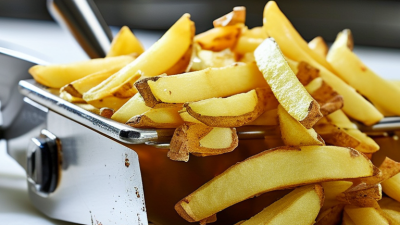
Choosing an automatic potato cutter starts with the finished product, not the machine’s headline speed. Straight sticks suit fries, while wedges need a different knife arrangement and feed path. Crinkle cuts require matched blades and stable potato positioning. Dicing demands closer control of both length and width. FAOSTAT’s 2022 data recorded roughly 374 million tonnes of global potato production, so processing conditions vary widely by crop, variety, and market. A cutter should handle your actual potatoes, not an ideal sample.
Capacity figures need careful interpretation. A machine rated at 500 kilograms per hour may achieve less with large, irregular potatoes or frequent loading pauses. I once treated rated capacity as real production output. That was a mistake. Test the cutter for at least 15 minutes with your normal potato size, then record usable pieces, trim waste, and cleaning time. Short trials can hide problems. USDA Agricultural Marketing Service standards classify potatoes by size and quality, making inlet diameter and feeding tolerance practical comparison points.
Size options also affect labor and product consistency. Check whether the cutter accepts whole potatoes, peeled potatoes, or pre-trimmed pieces. Measure the smallest and largest potatoes in your daily batch. Confirm available cuts, from narrow sticks to larger wedges, and ask how quickly blades can be changed. Food-contact parts should be removable without awkward tools. Small details matter. A slightly slower cutter may produce more saleable pieces if it reduces breakage, rejects, and rework.
Comparison of common automatic potato-cutting configurations. Capacity and dimensions are typical commercial ranges and can vary with potato size, feed method, cut thickness, operator loading, and machine construction.
| Cutting Style | Typical Cut Options | Typical Capacity | Feed or Hopper Capacity | Typical Machine Size | Motor Range | Best Application | Key Selection Point |
|---|---|---|---|---|---|---|---|
| French Fry Cutter | Strip widths of approximately 6, 9, 10, or 12 mm; adjustable strip lengths depend on potato size. | Approximately 300–800 kg/h | Usually 5–15 kg per loading cycle | Approximately 400–800 × 300–600 × 500–1,000 mm | About 0.75–2.2 kW | Restaurants, catering kitchens, frozen-fry preparation, and food-service production. | Choose the blade size according to the required fry width and verify that the feed opening accepts whole potatoes. |
| Wedge Cutter | Commonly 6, 8, or 10 wedges per potato; wedge thickness varies with potato diameter. | Approximately 200–500 kg/h | Usually 5–12 kg per loading cycle | Approximately 400–750 × 300–600 × 600–1,000 mm | About 0.75–1.5 kW | Potato wedges, roasted-potato portions, snack foods, and prepared-meal production. | Confirm the number of wedge sections and select a heavy-duty blade assembly for firm or large potatoes. |
| Dicing Cutter | Cubes commonly ranging from 6 × 6 mm to 20 × 20 mm. | Approximately 200–800 kg/h | Usually 5–20 kg per loading cycle | Approximately 500–1,000 × 400–700 × 700–1,200 mm | About 1.1–3.0 kW | Soups, salads, ready meals, casseroles, and industrial ingredient preparation. | Check whether the machine uses interchangeable cutting grids and whether it can maintain consistent cube dimensions. |
| Slicing Cutter | Typical slice thickness of approximately 1–10 mm; some units offer stepped thickness adjustment. | Approximately 300–1,000 kg/h | Usually 5–20 kg per loading cycle | Approximately 400–900 × 300–650 × 600–1,100 mm | About 0.75–2.2 kW | Potato chips, gratins, dehydrated products, garnishes, and food-processing lines. | Prioritize thickness control, blade sharpness, and product-support design to reduce broken or uneven slices. |
| Spiral Cutter | Spiral or tornado cuts with adjustable thickness commonly around 3–10 mm. | Approximately 100–300 kg/h | Usually 1–5 kg per loading cycle | Approximately 300–600 × 300–500 × 500–900 mm | About 0.25–0.75 kW | Street-food service, specialty snacks, exhibitions, and low-to-medium-volume production. | Measure available counter space and confirm the maximum potato length and diameter supported by the spindle. |
Practical buying checklist: Select a cutting style first, then match the rated capacity to your peak hourly demand rather than your average demand. Also compare blade-change time, food-contact material, cleaning access, safety interlocks, electrical supply, available floor space, and the maximum potato diameter accepted by the feed opening.
Choosing an automatic potato cutter means judging safety, hygiene, and maintenance together. The CDC estimates that foodborne illnesses affect about 48 million Americans annually. That figure makes contamination control more than a paperwork issue. Choose a cutter with guarded blades, an emergency stop, and an interlock that prevents operation when the cover opens. The feed hopper should keep hands away from moving parts. A stable frame also matters, especially when wet potatoes create vibration.
Hygiene begins with accessible construction. The FDA Food Code 2022 requires food-contact surfaces to be smooth, corrosion-resistant, and easily cleanable. Look for removable blades, rounded corners, open drainage paths, and minimal crevices around seals. Stainless steel helps, but it does not replace proper cleaning. I would inspect one after a busy shift, not only under showroom lights. Potato starch can dry into a hard film surprisingly fast. A machine may look clean and still hide residue beneath its cutting assembly.
Tips: Ask for a documented cleaning schedule and spare-part list. Test the emergency stop with an empty machine. Check whether operators can remove guards without special tools. Record blade sharpness, unusual noise, and motor temperature weekly. NSF/ANSI 8 certification can support equipment hygiene decisions, but certification alone is not a maintenance plan. Sometimes, the overlooked detail is drainage.
How to Choose an Automatic Potato Cutter?
Purchase price is only the opening number. Evaluate the cutter through total cost of ownership, including electricity, blades, cleaning time, labor, repairs, and downtime. The U.S. Department of Energy reports that motor-driven systems can consume about 70% of industrial electricity. Power efficiency deserves serious attention.
Calculate the likely energy bill before buying. A 2.2-kilowatt cutter running six hours daily for 300 days uses about 3,960 kilowatt-hours yearly. At $0.12 per kilowatt-hour, that equals roughly $475 annually. Actual rates vary. Ask for measured power consumption under a real potato load, not an empty test.
Capacity matters too. A faster machine may reduce labor, but only if feeding remains steady. FAOSTAT recorded global potato production above 370 million tonnes in recent years, showing the scale of this processing market. Still, a small kitchen should not pay for industrial capacity. Check cutting consistency, blade replacement cost, cleaning access, and safety controls. Request maintenance intervals and spare-part availability in writing. Five-year value can be estimated as purchase cost plus energy, labor, parts, and expected downtime.
A small spreadsheet helps.
My own assessment may be imperfect. Operators often underestimate cleaning time. That mistake can erase energy savings quickly. Choose the machine that fits your daily volume, not the largest specification sheet.