Leave Your Message

China Top Commercial French Fry Cutter Manufacturer?

Choosing China’s top commercial French fry cutter manufacturer depends on more than a low quoted price. In a busy kitchen, a cutter must turn whole potatoes into even strips without slowing meal preparation. Uniform cuts help fries cook at a more consistent rate. That detail matters during a lunch rush. Small design flaws can become daily frustrations.

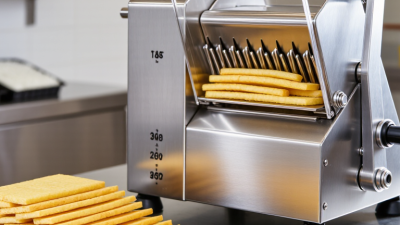
A French Fry Cutter Commercial buyer should examine the frame, blade assembly, handle, and available cut sizes. Stainless steel parts may support durability, but buyers should confirm the exact material and construction. Ask how blades are replaced, how the unit is cleaned, and whether spare parts are available. Request clear product specifications and, when possible, a sample or demonstration. Check packaging and delivery details, too. These questions sound basic. They are useful.

There is no single manufacturer that suits every restaurant or distributor. A compact manual model may work well for a small café, while a high-volume kitchen may need a sturdier unit and faster service support. Claims about capacity or durability should be supported by specific details, not attractive product photos alone. A supplier’s answers can reveal as much as its catalog. Still, comparisons are imperfect; actual performance depends on potato size, staff habits, and maintenance. This guide explains how to evaluate Chinese manufacturers, compare practical features, and choose a cutter that fits your operation.
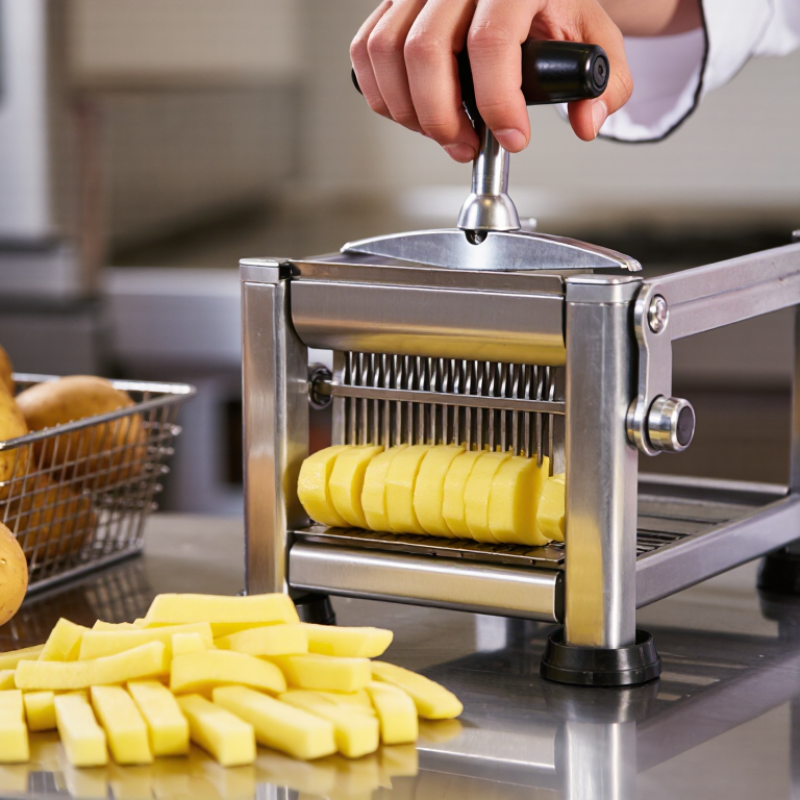
China Top Commercial French Fry Cutter Manufacturer?

What Defines a Commercial French Fry Cutter?

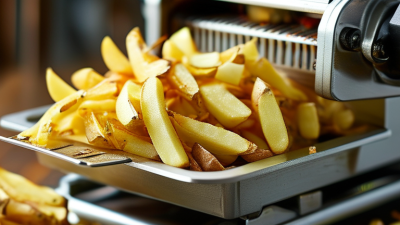
A commercial French fry cutter is defined by repeated, high-volume use, not merely a heavy frame. It should cut potatoes into consistent sticks with one controlled lever stroke, without excessive force or shifting on the work surface. Blade grids need to resist bending, while the pusher should guide potatoes evenly through the openings. In a busy kitchen, uneven cuts can cook at different speeds. That wastes product and complicates service. Small details matter.

Cleanability is equally important. The FDA Food Code 2022, section 4-101.11, calls for food-contact equipment to be durable, corrosion-resistant, and easily cleanable. A cutter with removable blades and accessible corners is easier to inspect between batches. USDA NASS’s 2023 Potato Summary reports roughly 425 million hundredweight of U.S. potatoes produced that year, illustrating the scale of the ingredient supply behind commercial kitchens. That figure does not determine cutter capacity, though. Buyers should test actual cut consistency, daily workload, and cleaning time with their own potatoes. A bigger cutter is not always better. I would also check whether replacement grids are readily available; this detail is easy to overlook.
How Commercial Fry Cutters Are Designed and Manufactured in China

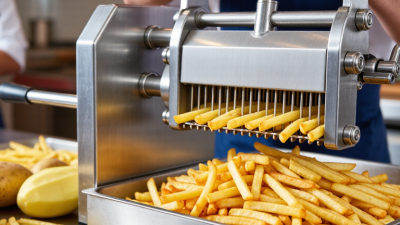
Commercial fry cutters made in China are shaped by a practical cycle: define the cut, build a sample, then test it under repeated use. Designers consider the target fry size, potato dimensions, daily workload, and available counter space. These details affect the frame, lever or drive mechanism, and removable blade grid. Small choices matter. A loose pusher can leave uneven pieces, while a stiff handle slows busy kitchen staff.

Manufacturing usually combines formed or machined metal parts with carefully fitted blades. Food-contact surfaces need smooth edges and easy access for cleaning. Workers check blade spacing, alignment, fasteners, and finish before assembly. Then cutters are tested with real potatoes, not only empty movements. The pieces should pass through evenly, without excessive force or crushed ends.

A prototype may reveal an awkward grip or a frame that shifts on a wet worktable. That is useful feedback, even if it means changing the design. Factory checks can improve consistency, but no single test captures every kitchen’s conditions. Blade wear and potato size still change the result over time.

Key Types and Features of Chinese-Made Fry Cutters

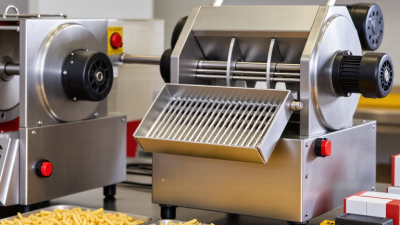
Chinese-made commercial fry cutters generally fall into three types: manual lever models, bench-mounted push cutters, and electric units. Manual cutters suit smaller prep stations. Their long handles multiply force, while interchangeable grids commonly produce 6 mm, 9 mm, or 12 mm fries. Bench-mounted designs add stability, often through clamp or suction feet. Electric cutters reduce repetitive hand work in higher-volume kitchens. They need more counter space and routine motor maintenance.

Blade material and frame design matter. Stainless-steel grids resist corrosion and can be removed for cleaning; cast-metal bodies add weight and stability. Look for guarded push plates, accessible fasteners, and replacement blades that match the machine’s exact dimensions. FAOSTAT’s Crops and Livestock Products database records more than 370 million tonnes of potatoes produced worldwide in 2022. That scale makes consistent cutting a practical concern, though crop volume alone does not predict demand for commercial cutters. A small caveat: a sharp blade cannot correct soft or irregular potatoes. Buyers should test-cut their own produce and confirm cut size, cleaning access, and spare-part availability before choosing. Specs can look convincing on paper.

How to Evaluate a Top Chinese Fry Cutter Manufacturer

Evaluating a top Chinese commercial fry cutter manufacturer takes more than comparing prices and polished product photos. Ask for drawings, blade material details, cutting-size options, and the rated output per hour. Check whether the frame stays stable when a worker presses firm potatoes through the pusher. A sample test can reveal uneven sticks, excessive effort, or blades that clog with residue. Small details matter.

Tips: Request a sample and run several potatoes through it. Check cut consistency, cleaning access, blade replacement, and the clarity of the operating instructions.

Also review the manufacturer’s quality records and traceability for food-contact parts. Ask how each unit is inspected before shipment, and request clear answers about spare blades, packaging, and lead times. Safety features should be visible and practical, not just listed in a brochure. A polished catalog can still leave important questions unanswered; I would not treat one successful demo as proof of long-term durability. Ask about repeated-use testing, then compare the response with your own workload and cleaning routine. A supplier’s willingness to explain limitations can be as useful as its claims.

Industry Applications and Purchasing Considerations

China Top Commercial French Fry Cutter Manufacturer?

Industry Applications and Purchasing Considerations

Commercial fry cutters serve restaurant kitchens, hotel food services, cafeterias, and food-preparation facilities. A compact countertop unit may suit a small kitchen making a few baskets per shift. Larger operations often need higher throughput and a stable floor-standing machine. Match the cutter to the potatoes actually used: long russets, smaller varieties, and chilled potatoes can behave differently. Cut size matters, too. A 10 mm grid creates a different cooking result from a 12 mm grid. Small details matter.

Before purchasing, check hourly capacity under realistic conditions, not just a catalog figure. Production claims can be optimistic. Ask whether the machine handles your typical potato size and whether replacement blades are available. Look for secure guards, easy-to-clean food-contact surfaces, and parts that can be removed without awkward tools.

Confirm the required power supply and available counter or floor space. If possible, test a sample batch and inspect the fries for even cuts, crushed ends, and excess waste. Cleaning time also affects labor costs. A fast machine is less useful if its blade assembly is difficult to maintain.

A cutter will not fix inconsistent raw materials, and that is easy to overlook.