Leave Your Message

2026 Best Commercial French Fry Cutter for Global Buyers?

Choosing the 2026 Best Commercial French Fry Cutter requires more than comparing prices and product photos. Global buyers need equipment that performs consistently during busy service, not just during a short demonstration. A reliable French Fry Cutter Commercial should produce even portions, reduce preparation time, and handle repeated use without excessive strain.

A restaurant may process hundreds of potatoes before lunch. In that setting, blade sharpness, cutting capacity, frame strength, and operator safety matter greatly. Stainless steel construction supports hygiene and easier cleaning. Replaceable blades can also reduce long-term maintenance costs. However, specifications alone can mislead. Real performance depends on potato size, firmness, preparation habits, and staff training.

This guide examines practical features for restaurants, catering companies, hotels, and food-service distributors. It considers manual and electric models, output consistency, cleaning access, storage, packaging, and shipping requirements. Buyers should also verify voltage, plug type, warranty coverage, and destination-market certifications before ordering. Those details are easy to overlook.

No machine is perfect. A high-capacity cutter may require more counter space, while a compact model may slow production during peak hours. Some supplier claims need closer verification through samples, customer feedback, or independent testing. Therefore, this comparison focuses on usable evidence and realistic operating conditions. The goal is a dependable purchase, not an impressive catalog description.
2026 Best Commercial French Fry Cutter for Global Buyers?

What Is a Commercial French Fry Cutter?

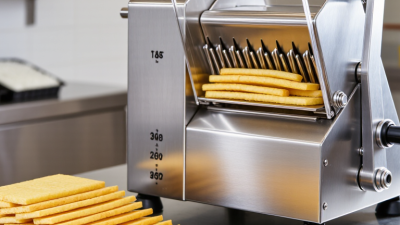
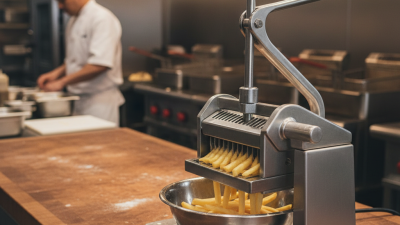
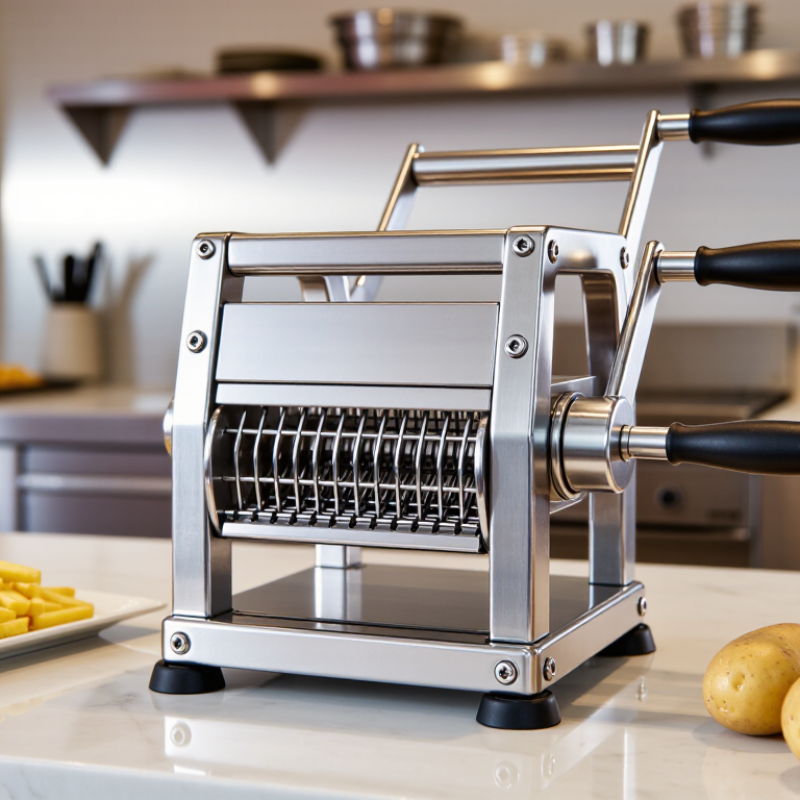
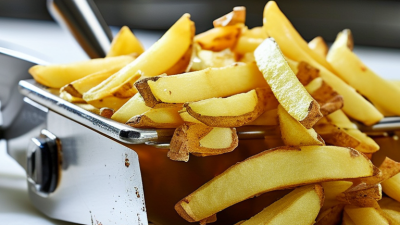
A commercial French fry cutter is food-processing equipment designed to turn whole potatoes into uniform sticks at high volume. Unlike a small home slicer, it has a reinforced frame, a food-contact cutting grid, and a lever or powered pressing mechanism. The operator places a prepared potato against the blade block, then applies controlled pressure. The potato passes through the blades and falls into a tray or container.

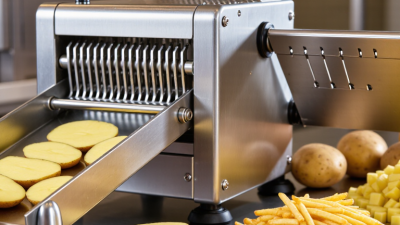
Commercial models commonly produce 6, 9, or 12 millimeter cuts. Some cutting blocks create wedges or specialty shapes. Uniform pieces cook more evenly, which helps control texture, oil absorption, and serving consistency. In busy kitchens, this matters every hour. Not decorative.

From practical equipment checks, I look closely at blade strength, handle movement, mounting stability, and cleaning access. Stainless steel contact surfaces are useful, but smooth design matters more than appearance. Removable blade assemblies can simplify inspection and sanitation. Safety guards should keep hands away from the cutting area during operation. Electric models also require voltage compatibility, while manual units need secure table or wall support.

Still, no cutter fixes poor potatoes. Oversized, soft, or uneven produce can jam the grid and increase waste. I have seen operators press too quickly, damaging blades and producing irregular pieces. That mistake is easy to repeat. Buyers should check daily capacity, replacement blade availability, cleaning procedures, and operator training before choosing equipment for international use.
How Commercial French Fry Cutters Work

2026 Best Commercial French Fry Cutter for Global Buyers?
How Commercial French Fry Cutters Work

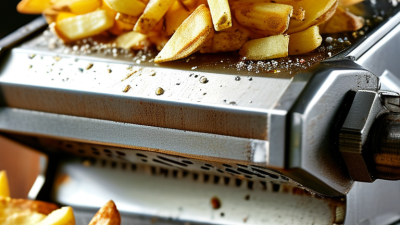
A commercial French fry cutter uses a pusher, cutting grid, and controlled mechanical force. The operator places a cleaned potato inside the chamber. Pressing the handle drives the potato through sharp, evenly spaced blades. The grid determines the fry thickness, while the chamber helps maintain alignment. Larger machines may use pneumatic or motor-assisted pressure for faster production. The principle is simple. Consistency matters more than speed alone.

In daily foodservice use, potato size and firmness affect cutting performance. A soft potato may compress before entering the grid. A very large potato can increase operator effort and blade stress. I have found that stable mounting improves both safety and portion accuracy. However, no cutter performs perfectly with every potato. This detail is easy to overlook when comparing capacity figures. Buyers should check grid replacement, cleaning access, handle comfort, and corrosion-resistant construction. These practical points often matter more than impressive specifications.

Tips: Select a cutter with interchangeable grids for different fry sizes. Test several potato varieties before purchase. Keep blades clean and dry after washing. Inspect fasteners and cutting edges regularly. A small bend in the grid can create uneven fries and unnecessary waste. Measure counter space carefully, too. Many buyers forget the space needed for the handle movement.

Key Features for Global Buyers to Compare

2026 Best Commercial French Fry Cutter for Global Buyers? Key Features for Global Buyers to Compare

Global buyers should compare output, consistency, and serviceability before comparing prices. FAOSTAT reported more than 374 million metric tons of potatoes produced worldwide in 2022. That scale creates demanding preparation needs. A commercial cutter should produce uniform strips during repeated batches, not only during a showroom demonstration.

Run a practical test with firm potatoes and record cuts per minute, waste, and operator fatigue. Blade dimensions must match local menu standards, such as 9 mm, 12 mm, or thicker chips. Stainless steel construction helps resist moisture, salt, and frequent cleaning. Check the frame, fasteners, and cutting grid carefully. Small crevices can retain potato starch. That is not a minor issue.

Foodservice Equipment & Supplies industry surveys consistently rank durability, cleaning access, and equipment reliability among major purchasing concerns. Buyers should verify food-contact materials, guarding, replacement blade availability, and technical support before shipment. Manual models suit lower-volume kitchens, while pneumatic or powered units may support heavier production. However, energy demand, voltage compatibility, noise, and installation space require local confirmation. CE, UL, or equivalent documentation may be requested, depending on the destination market. Do not trust vague compliance claims. Ask for test records and operating instructions in clear English. My practical concern is often overlooked: a cutter can be strong, yet awkward to clean. That weakness appears after the first busy service.

2026 Best Commercial French Fry Cutter for Global Buyers? - Key Features for Global Buyers to Compare
Commercial Cutter Type Typical Output Common Cut Sizes Operating Method Product Contact Material Approx. Unit Weight Power or Air Requirement Best Use Case Global Buyer Checkpoints
Manual Countertop Cutter Approximately 20–60 kg/h, depending on potato size and operator speed 6 mm, 9 mm, 10 mm, 12 mm and 13 mm standard options Hand-operated lever or push block Stainless steel cutting grid; food-contact plastic or stainless steel pusher Approximately 4–10 kg No electricity or compressed air required Small restaurants, cafés, food trucks and low-volume kitchens Check mounting stability, replacement blade availability, handle clearance and whether the unit fits the available counter depth
Heavy-Duty Lever Cutter Approximately 50–120 kg/h, depending on operator technique and potato condition 6–14 mm; interchangeable grids are commonly available Long-lever mechanical operation with countertop or wall mounting 304 stainless steel is commonly specified for blades and food-contact surfaces Approximately 8–18 kg No electricity or compressed air required Busy restaurants, hotels and institutional kitchens requiring consistent manual production Compare frame rigidity, mounting holes, blade replacement cost, corrosion resistance and operator ergonomics
Pneumatic Commercial Cutter Approximately 100–300 kg/h, depending on cylinder size, cycle time and potato loading 6–14 mm standard cuts; custom grids may be available Foot pedal or control valve activates a pneumatic cylinder Stainless steel food-contact components with industrial polymer seals Approximately 20–45 kg Typically 5–8 bar compressed air; actual consumption varies by cycle Central kitchens and processors with an existing compressed-air system Verify air pressure, air consumption, filtration requirements, emergency controls and compatibility with local machinery-safety rules
Motorized Batch Cutter Approximately 150–500 kg/h, depending on motor power, hopper size and feeding method 6–16 mm using interchangeable cutting assemblies Electric motor drives a pusher or cutting mechanism Stainless steel food-contact areas; sealed drive housing preferred Approximately 35–90 kg Common configurations include 110–120 V or 220–240 V, 50/60 Hz; motor ratings often range from 0.75–2.2 kW High-volume restaurants, catering operations and food-preparation departments Confirm voltage, frequency, phase, plug type, motor protection, overload protection and local electrical certification
Continuous Automatic Cutter Approximately 300–1,000 kg/h, subject to feed system, potato size and cut specification Commonly 6–14 mm; cutting assemblies determine final dimensions Continuous conveyor or hopper feeding with powered cutting system Typically stainless steel construction in product and washdown zones Approximately 80–250 kg Often 1.5–7.5 kW; voltage and phase must be confirmed for the destination country Large-scale catering, commissary kitchens and food-processing lines Evaluate conveyor integration, throughput testing, guarding, sanitation access, spare-part lead time and operator training
Adjustable Strip-Cut System Approximately 50–400 kg/h, depending on whether operation is manual, pneumatic or motorized Adjustable or interchangeable grids, commonly 6–16 mm Manual, pneumatic or electric operation depending on configuration Stainless steel cutting grid and food-safe pusher materials Approximately 10–80 kg May require no utilities, compressed air or single/three-phase electricity Buyers serving multiple markets with different menu and portion requirements Check actual adjustment method, cut-size repeatability, grid storage, changeover time and availability of metric or imperial accessories
Washdown-Ready Cutter Approximately 50–500 kg/h, depending on the operating system Usually 6–14 mm with removable cutting grids Manual, pneumatic or motorized Stainless steel body and food-contact parts; electrical components should be protected from water ingress Approximately 8–100 kg Utility requirements depend on the drive system; motorized units should specify an appropriate IP rating Commercial kitchens with frequent cleaning and strict hygiene procedures Request cleaning instructions, drain design, removable-part details, gasket materials and electrical protection documentation
Safety-Focused Commercial Model Approximately 50–500 kg/h, depending on configuration Typically 6–14 mm with enclosed or guarded cutting areas Manual lever, two-hand control, foot control or guarded automatic cycle Food-grade stainless steel and durable food-safe polymers Approximately 8–120 kg None, compressed air or electricity depending on the model Professional kitchens where operator protection and repeatable procedures are priorities Look for blade guards, interlocks, emergency stops on powered models, stable feet, safety instructions and conformity documents

Buyer note: Output figures are typical commercial ranges rather than guaranteed performance. Actual capacity depends on potato variety, diameter, temperature, loading method, cut size, operator speed and maintenance. Before ordering, request a sample-cut test, dimensional drawings, utility specifications, packing dimensions, spare-part lists and destination-market compliance documents.

Commercial French Fry Cutter Types and Applications

A commercial French fry cutter should match the kitchen’s volume, product size, and working habits. Manual lever cutters suit cafés, small restaurants, and food trucks. They use operator force and require little maintenance. A countertop electric cutter serves busy kitchens that prepare steady batches throughout the day. It reduces physical effort but needs reliable power and regular cleaning. Pneumatic models fit central kitchens and processing rooms with existing air systems.

Different cutter designs support different applications. Interchangeable blades can produce shoestring, standard, or thick-cut fries. A sturdy push block handles whole potatoes more consistently than improvised hand cutting. In a restaurant, a manual unit may process several portions during a lunch rush. In a school or institutional kitchen, an electric unit can improve portion uniformity across large meal schedules. Food processors also use heavy-duty cutters for pre-processing before frying, chilling, or packaging.

Look closely at the frame, blade housing, and food-contact materials. Smooth stainless surfaces are easier to wash, while hidden corners can collect starch and moisture. No cutter is perfect. High-output machines may waste more potato ends, and compact models can slow down during peak service. Operators should test real potatoes, not only product samples, before purchasing. Check cutting force, cleaning time, replacement blade access, and operator safety features. A practical trial often reveals more than a specification sheet.

How to Select, Operate, and Maintain the Right Model

2026 Best Commercial French Fry Cutter for Global Buyers?

How to Select, Operate, and Maintain the Right Model

Selecting a commercial French fry cutter starts with the workload, not the catalog photo. Estimate hourly volume, potato size, counter space, and operator strength. A sturdy stainless-steel frame should remain stable during repeated lever movement. Check blade dimensions carefully; a 9 mm cut may not suit every menu or cooking method. Global buyers should confirm voltage, spare-part availability, food-contact materials, and local safety requirements before ordering. Request a clear operating manual. It prevents avoidable mistakes.

Operate the cutter with firm, even pressure. Never force an oversized or frozen potato through the chamber. Keep hands behind the guard, and train operators to identify loose parts or damaged blades. Test potatoes from different batches, because moisture and shape can change cutting resistance. Consistency matters. Perfect uniformity is not realistic when raw produce varies. That detail is easy to overlook.

Tips: Clean the chute, pusher, and blade assembly after each service. Use a soft brush for starch buildup, then dry every part fully to reduce corrosion. Inspect fasteners daily, and sharpen or replace blades according to the manual. Record maintenance dates and cutting performance. A short log can reveal problems before service slows. Watch for noise, wobbling, or increasing handle resistance. Small warnings deserve attention.