Leave Your Message

How to Choose the Best Potato Blanching Machine

Choosing the right Potato Blanching Machine affects texture, color, yield, energy use, and food safety. Potato processors face rising efficiency demands as global production remains above 370 million tonnes annually, according to the FAOSTAT Crops and Livestock Products database. That volume makes small process losses significant. A few extra seconds in hot water can soften potato strips, increase starch loss, and weaken final crispness. Details matter.

Industry guidance also supports a measured approach. The USDA Agricultural Marketing Service standards for frozen French fried potatoes emphasize appearance, color, texture, and defects. These qualities depend heavily on blanching control. A suitable machine should provide stable temperature, adjustable residence time, uniform product movement, and effective water circulation. It should also allow practical cleaning between production runs. Heat is unforgiving.

Energy performance deserves equal attention. The U.S. Department of Energy identifies food processing as an important industrial energy-use sector, where heating systems can create avoidable losses. Therefore, buyers should compare insulation, heat recovery options, water filtration, and automatic controls. A lower purchase price may become expensive through water waste, uneven heating, or frequent maintenance. That assumption can fail.

Real selection requires more than reading a brochure. Request test results using your potato variety, strip size, throughput, and target moisture level. Check whether the supplier documents calibration, sanitation design, spare-part availability, and operator training. Food-contact materials should align with applicable safety requirements in the installation region. No specification replaces a pilot test. Careful evaluation may reveal that the largest machine is not the best machine. Performance, reliability, and process fit should guide the final decision.

How to Choose the Best Potato Blanching Machine

What a Potato Blanching Machine Does and Why It Matters

How to Choose the Best Potato Blanching Machine

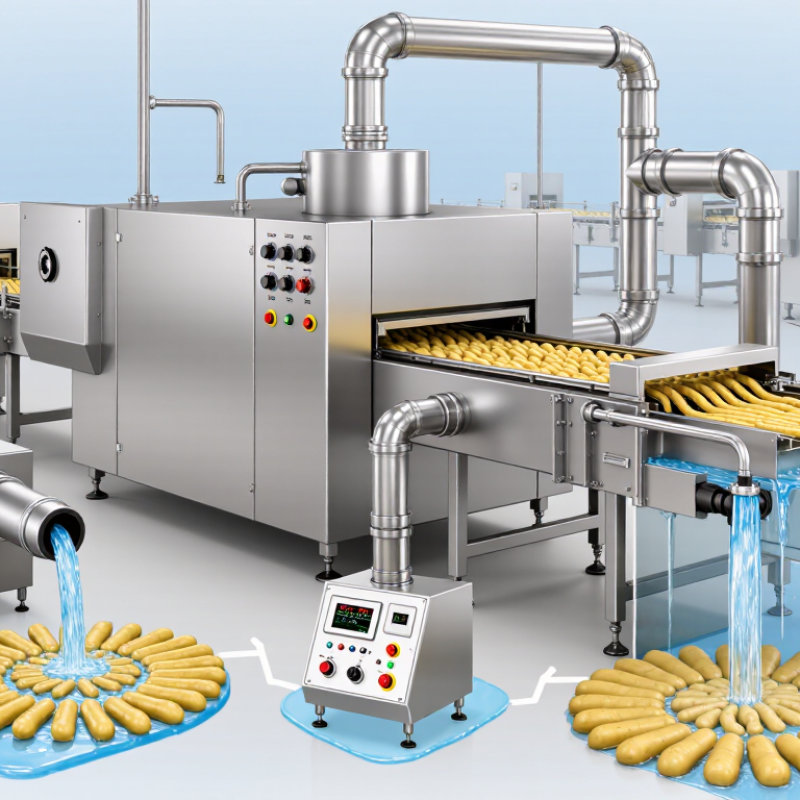
A potato blanching machine briefly heats cut potatoes before freezing, frying, or dehydration. This step reduces enzyme activity, helping prevent gray or brown discoloration. It also softens tissue and supports more even cooking. The effect is visible: properly blanched strips keep a cleaner color and firmer bite.

Scale matters. FAOSTAT reports global potato production above 370 million tonnes in recent years, creating strong demand for consistent processing. A suitable machine should match daily throughput, cut size, heating method, and available floor space. Steam blanchers usually reduce water use, while water blanchers can deliver direct, even heat. Both require careful temperature control. USDA Agricultural Marketing Service standards for frozen French fried potatoes emphasize uniform color, texture, and freedom from major defects. Blanching directly supports these quality targets.

Do not choose by capacity alone. Measure heating recovery after loading, residence-time accuracy, and water filtration performance. Check whether operators can inspect belts, nozzles, and drains without difficult access. A 2023 study in the Journal of Food Engineering found that blanching conditions influence potato texture, color, and nutrient retention, although results vary with cultivar and slice thickness. That variation matters. A setting that works for thin strips may weaken thick wedges. Real production trials are essential, and one trial is rarely enough. Temperature displays can also mislead when water circulation is uneven. Reliable selection depends on recorded product temperatures, texture checks, energy use, and honest maintenance feedback.

How to Match Machine Capacity with Potato Processing Requirements

Choosing the best potato blanching machine starts with a realistic capacity calculation. FAOSTAT data shows global potato production exceeded 370 million metric tons in 2022, increasing pressure on processors to reduce delays and product loss. However, a larger machine is not automatically better.

Measure raw potato intake during the busiest hour, not the daily average. For example, a plant receiving 1,000 kilograms per hour should not select a 1,000-kilogram-per-hour blancher. Washing, peeling, cutting, and inspection create interruptions. A practical design target is often 15–25% above peak demand, although the exact margin depends on labor and upstream equipment. Check residence time carefully. If cut potatoes need three minutes at 80°C, the usable water volume and belt speed must maintain that condition consistently. Uneven heating can leave centers firm while damaging surface texture. That detail is easy to overlook.

Tips: Record hourly intake for at least seven production days. Include potato size, cut shape, moisture, and rejected pieces. Ask suppliers for tested throughput, energy use, and temperature recovery data, not only a headline capacity. The USDA’s Economic Research Service has reported that processed potatoes represent a major share of potato consumption in the United States, so stable quality matters as much as speed. My own caution is simple: capacity estimates often look precise, but seasonal raw material changes can make them wrong. Leave room for adjustment.

Which Heating, Cooling, and Blanching Methods Are Available

Choosing the best potato blanching machine begins with its heating method. Hot-water blanching transfers heat evenly around each potato piece, making it suitable for uneven cuts and continuous production. Steam uses less water and can reduce nutrient loss, but poor steam distribution may leave the center underprocessed. Electric or thermal-fluid heating can maintain stable temperatures, yet the system needs accurate sensors and regular calibration.

Cooling is equally important. Cold-water immersion removes heat quickly and helps prevent softening after blanching. A spray cooler uses less water, but coverage must remain consistent across the conveyor. Air cooling requires less wastewater treatment, although it usually takes longer and may not cool thick potato strips evenly. In practice, I would check the temperature at the product center, not only in the tank.

The blanching method should match the final product. French fries often need enzyme control without excessive cooking, while diced potatoes may require stronger heat penetration. Test several belt speeds, water temperatures, and residence times with actual batches. Small differences in cut thickness can change the result. Do not rely on a single reading. A slightly firm sample may be safer than a soft one, but under-blanching can cause discoloration during storage. Record texture, color, moisture, and cooling time before selecting the machine configuration. Perfect settings are rare. Rechecking them is part of good process control.

How to Choose the Best Potato Blanching Machine - Which Heating, Cooling, and Blanching Methods Are Available
Process Area Available Method Typical Operating Conditions Main Advantages Key Limitations Best-Suited Potato Products Important Selection Criteria
Heating and Blanching Methods
Heating and blanching Hot-water immersion blanching Water temperature: approximately 70–95°C
Typical residence time: about 2–10 minutes
Provides uniform heat transfer; suitable for whole, sliced, diced, and strip-cut potatoes; easy to control through water temperature and conveyor speed. Uses a relatively large volume of water; soluble solids and nutrients can migrate into the blanching water; requires water filtration and sanitation control. French fries, potato strips, cubes, slices, and products requiring consistent enzyme inactivation. Choose a machine with adjustable residence time, water-level control, filtration, recirculation, and hygienic access for cleaning.
Heating and blanching Continuous steam blanching Saturated steam environment: generally close to 100°C at atmospheric pressure
Residence time: commonly 1–8 minutes
Reduces direct water contact; can lower soluble-solid loss; compact heat-transfer system with good thermal efficiency when properly insulated. May require careful control to prevent surface drying or uneven treatment; steam generation and condensate management add complexity. Potato strips, slices, diced potatoes, and products where reduced water consumption is important. Check steam pressure stability, condensate drainage, product loading depth, insulation quality, and temperature uniformity across the belt.
Heating and blanching Steam-assisted hot-water blanching Water temperature: approximately 80–95°C
Steam injection or external heat exchanger maintains process temperature
Combines direct water contact with rapid temperature recovery; useful for high-throughput lines and variable product loads. More components than a basic water blancher; steam injection can increase turbulence and water-management requirements. High-volume French fries, potato wedges, slices, and mixed cut sizes. Evaluate heat-up response, temperature recovery after loading, water circulation pattern, and control of product agitation.
Heating and blanching Electric-heated blanching system Process temperature commonly controlled within approximately 70–95°C
Heating capacity depends on product load and line speed
Precise temperature control; suitable where steam is unavailable; generally simple to automate and easy to integrate with digital controls. Electrical operating cost can be high in regions with expensive electricity; large systems may require substantial connected power. Small- to medium-scale processing, pilot lines, specialty products, and facilities without a central boiler. Compare installed power, local electricity tariffs, heat-loss insulation, control accuracy, and available electrical service capacity.
Heating and blanching Indirect heat-exchanger system Process water is heated through a plate, tubular, or scraped-surface heat exchanger
Blanching water is normally maintained around 70–95°C
Separates the heating utility from the product-contact water; supports hygienic operation and consistent temperature control. Higher initial equipment cost; heat exchangers require inspection and cleaning to control fouling. Large continuous lines and facilities that need controlled water quality or multiple heating utilities. Consider heat-transfer area, fouling resistance, clean-in-place capability, pressure drop, and access for maintenance.
Heating and blanching Microwave-assisted blanching Volumetric electromagnetic heating; exposure time is usually measured in seconds to minutes
Product temperature is controlled according to cut size and moisture content
Rapid internal heating and potentially shorter residence time; can reduce the size of the thermal process section. High capital cost; heating uniformity depends on product geometry, moisture distribution, and equipment design; less common for very high-throughput potato lines. Specialty potato products, research applications, and lines requiring rapid heating of relatively uniform pieces. Require product trials to verify temperature uniformity, hot-spot control, shielding, power density, and overall energy consumption.
Cooling Methods After Blanching
Cooling Cold-water immersion cooling Cooling water commonly maintained around 5–20°C
Residence time often about 1–5 minutes, depending on product size
Fast and uniform cooling; removes surface heat effectively; can be combined with flumes and conveyors. Consumes water and may increase wastewater volume; requires hygienic water management and dewatering before frying or freezing. French fries, potato strips, diced potatoes, slices, and products requiring rapid temperature reduction. Check cooling capacity, water turnover, filtration, antimicrobial controls where applicable, belt drainage, and product-to-water ratio.
Cooling Spray-water cooling Chilled or tempered water is sprayed over the product
Typical water temperature: approximately 5–20°C
Uses less water than full immersion in many layouts; provides good surface coverage and can be installed over a continuous belt. Cooling may be less uniform for piled or densely loaded product; spray nozzles can block if filtration is inadequate. Flat potato slices, strips, wedges, and products transported on a perforated conveyor. Evaluate nozzle arrangement, spray pressure, filtration, belt loading depth, drainage, and the required final product temperature.
Cooling Forced-air cooling Ambient or conditioned air is circulated across the product
Air temperature and humidity depend on the target cooling rate
Minimal direct water use; avoids dilution and reduces wastewater generation; suitable when a dry product surface is preferred. Usually slower than water cooling; requires larger air volume and careful control of airborne hygiene and product dehydration. Dry potato pieces, lightly blanched products, specialty cuts, and facilities seeking reduced water use. Consider air velocity, air filtration, humidity, residence time, product bed depth, fan power, and heat recovery opportunities.
Cooling Vacuum cooling Rapid evaporative cooling under reduced pressure
Cooling performance depends on product moisture, load size, and vacuum level
Very fast cooling for suitable products; can reduce the time spent in the temperature range favorable to microbial growth. Moisture loss can occur; equipment and vacuum-system costs are higher; product geometry and packaging requirements may limit use. Selected cooked or blanched potato products where rapid cooling is more important than maximum moisture retention. Confirm acceptable weight loss, product texture, vacuum pump capacity, chamber size, and compatibility with downstream packaging.
Machine Selection Dimensions
Capacity Throughput and residence-time control Capacity is normally specified in kg/h or tonnes/h
Residence time is adjusted using belt speed, water depth, or chamber length
Allows the blancher to match upstream cutting and downstream frying, freezing, or drying equipment. Increasing throughput without increasing heating or cooling capacity can reduce treatment uniformity. All continuous potato-processing lines. Select capacity from the actual hourly feed rate, peak load, product density, cut size, and required safety margin rather than nominal belt width alone.
Product quality Temperature and time monitoring Use calibrated sensors and a recorded process profile
Target conditions vary with cultivar, cut size, solids content, and final product specification
Supports consistent color, texture, enzyme control, and final moisture performance. A single temperature reading may not represent the coldest product zone or the complete process history. Products with strict color, firmness, or frying-quality requirements. Require multiple measurement points, alarms, data logging, adjustable belt speed, and validation trials with the actual potato variety.
Water and energy efficiency Recirculation, heat recovery, and insulation Efficiency depends on water flow, heat losses, utility temperature, product load, and recovery design Can reduce utility consumption and stabilize process temperature during continuous operation. Additional pumps, filters, heat exchangers, and controls increase maintenance requirements. Medium- and high-capacity facilities operating for long production shifts. Compare water use per tonne, energy use per tonne, heat-recovery potential, insulation quality, and wastewater treatment requirements.
Hygiene and maintenance Sanitary conveyor and clean-in-place design Food-contact surfaces should be corrosion-resistant, smooth, accessible, and suitable for routine sanitation Reduces contamination risks and shortens cleaning and inspection time. More hygienic construction and automated cleaning features may raise the purchase price. Every commercial potato blanching application. Check drainability, dead-leg prevention, removable guards, filter access, spray-ball coverage, belt cleaning, and documentation for sanitation procedures.
Overall recommendation Method selection based on product and plant conditions Hot water is the most versatile option; steam reduces direct water contact; water cooling is fastest; air cooling minimizes direct water use Matching the method to the product cut, required texture, throughput, utility availability, and sanitation program improves process reliability. No single blanching and cooling method is optimal for every potato product or factory layout. New installations, line upgrades, and process standardization projects. Run a production-scale trial and verify temperature uniformity, texture, color, water use, energy use, yield, and downstream performance before final purchase.

How to Evaluate Hygiene, Safety, Energy Use, and Maintenance

How to Choose the Best Potato Blanching Machine

Hygiene should be judged by design, not appearance. A smooth stainless-steel surface can still hide starch inside welds, seals, and drain channels. Choose sloped surfaces, tool-free access, and fully drainable piping. The FDA Food Code 2022 requires food-contact surfaces to be smooth, durable, corrosion-resistant, and easily cleanable.

This matters because the WHO estimates that contaminated food causes 600 million illnesses worldwide each year.

A clean-looking machine is not always clean.

Safety evaluation must include temperature control, emergency stops, guarded drives, and safe access during cleaning. Check whether operators can confirm water temperature without opening hot chambers. HACCP-based monitoring should record blanching time, temperature, and corrective actions. Codex Alimentarius, in its General Principles of Food Hygiene, identifies monitoring and verification as essential control activities.

The weak point is often human behavior.

A complicated panel may be technically safe but poorly used during a busy shift.

Energy and maintenance deserve measurable tests. The International Energy Agency reports that industry uses about 37% of global final energy, making pump efficiency and heat recovery practical concerns. Ask for water-use data at the target potato throughput, not empty-machine figures. The U.S. Department of Energy notes that compressed-air systems may waste 20–30% of output through leaks, so pneumatic components need inspection access.

Review belt, seal, and bearing replacement intervals.

No checklist catches every failure. Trial runs may reveal awkward cleaning points that specifications miss.

What to Check Before Purchasing and Installing the Machine

How to Choose the Best Potato Blanching Machine

What to Check Before Purchasing and Installing the Machine

Before purchasing a potato blanching machine, confirm your real production target. Record hourly output, potato sizes, slice thickness, and expected seasonal changes. A machine rated for maximum capacity may perform poorly with uneven feeding. Small details matter. Ask for test results using potatoes similar to yours, not ideal samples prepared by a supplier.

Check the blanching temperature range, holding time, water circulation, and heat recovery system. Stable temperature control protects color, texture, and processing consistency. Stainless steel construction should suit frequent washing and food contact requirements. Inspect welds, corners, doors, and drainage points. These areas often collect starch and become difficult to clean. Request clear maintenance instructions, spare-part availability, and operator training. Reliable documentation is more valuable than impressive sales claims.

Installation requires more than floor space. Measure the machine, service clearance, door width, ceiling height, water supply, drainage, ventilation, and electrical load. Leave room around pumps and control panels. Measure twice. Confirm that the floor can support the operating weight, including water. A trial layout with tape on the floor can reveal awkward access before delivery. I would not treat the first capacity estimate as final; product variety, water temperature, and operator habits can change performance. A supervised test run after installation should check temperature recovery, conveyor speed, cleaning time, and emergency controls before regular production begins.