Leave Your Message

China Top 10 Small Scale Potato Chips Machine Manufacturers

Choosing reliable equipment matters when a small food business plans to produce consistent potato chips. This guide introduces China’s top 10 small-scale potato chips machine manufacturers, focusing on practical performance rather than attractive claims. Each supplier is considered through manufacturing experience, machine design, production capacity, and customer support. The goal is simple: help buyers compare equipment with clearer expectations.

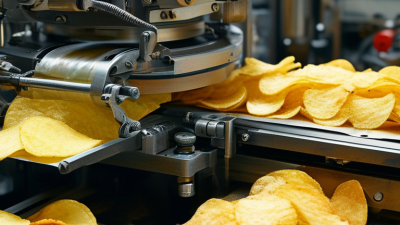
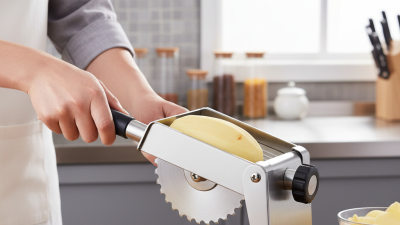
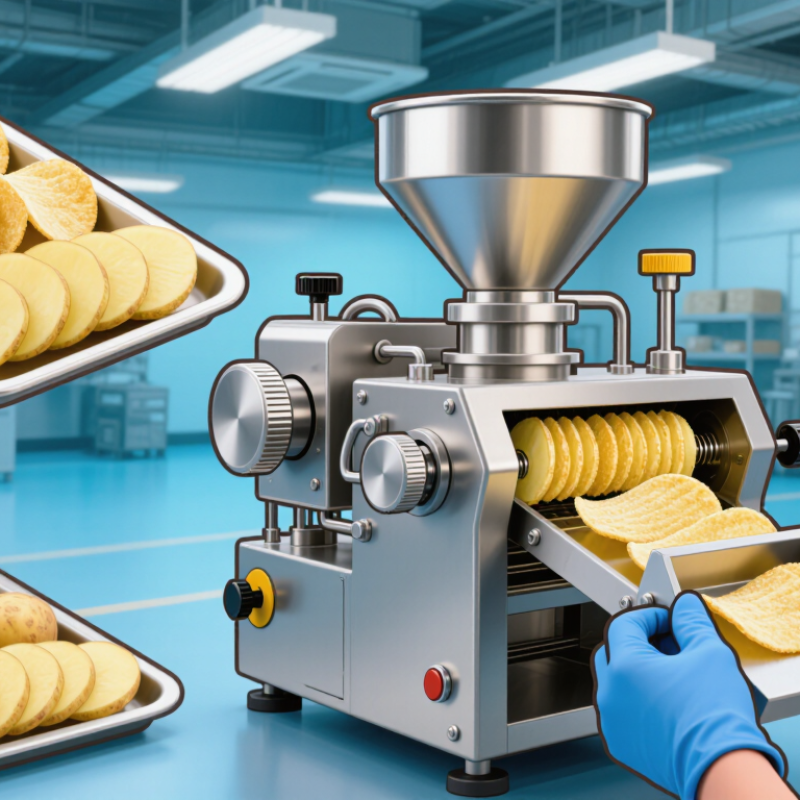
A dependable Small Scale Potato Chips Machine should provide stable slicing, even frying, manageable temperature control, and convenient cleaning. Stainless steel construction is valuable around wet processing areas. Adjustable cutting thickness can also support different product styles, from thin, crisp chips to thicker snack slices. Buyers should examine oil filtration, heating methods, electrical specifications, safety guards, and spare-parts availability. Factory videos can help, but they do not replace a live inspection or verified customer reference.

Details matter.

This overview also considers customization, installation guidance, warranty terms, and export experience. However, no ranking is perfect. A manufacturer may perform well for one workshop and poorly for another because local power standards, labor skills, and production targets differ. Some suppliers publish limited technical data, which requires careful follow-up. Buyers should request drawings, test samples, material certificates, and a clear quotation before making a decision. Independent verification remains wise. The strongest choice is not always the largest company; it is the supplier that understands your daily output, budget, maintenance ability, and product quality requirements. Expect questions, not instant promises. That is often a healthier sign of professional cooperation.
China Top 10 Small Scale Potato Chips Machine Manufacturers

Defining Small-Scale Potato Chips Machines by 50–500 kg/h Throughput

China Top 10 Small Scale Potato Chips Machine Manufacturers

Defining Small-Scale Potato Chips Machines by 50–500 kg/h Throughput

In this market, “small-scale” usually describes production capacity, not machine size alone. Equipment handling 50–500 kg of fresh potatoes per hour suits farms, snack workshops, restaurants, and regional processors. A 50 kg/h line may fit inside a compact workspace. A 500 kg/h system needs stronger washing, frying, cooling, and packaging coordination.

Capacity figures require careful checking. Some manufacturers measure raw potato input, while others report finished chips. The difference can be substantial. Ask for test data, potato variety, moisture level, slice thickness, and frying conditions. A reliable supplier should explain these variables clearly. Vague numbers deserve caution.

A practical comparison should examine stainless-steel construction, adjustable slicing, oil temperature control, and cleaning access. For small workshops, quick-change blades and simple electrical controls reduce downtime. Operators also need safe guards, emergency stops, and clear maintenance instructions. I would inspect weld quality around the fryer and check whether spare heating elements are available. Small details matter.

The “top 10” label should not be accepted blindly. A manufacturer may build excellent machines but lack installation support or export experience. Another may offer low prices with limited documentation. That is an uncomfortable point. Real performance often depends on raw materials, operator skill, and local power conditions. Requesting a live trial with similar potatoes can reveal more than a polished catalogue.

China Top 10 Small Scale Potato Chips Machine Manufacturers - Defining Small-Scale Potato Chips Machines by 50–500 kg/h Throughput
Rank Manufacturer Profile Main Production Region Rated Throughput Potato Preparation Slice Thickness Range Heating Method Installed Power Typical Footprint
1 Profile A Shandong 50–80 kg/h Washing, peeling and slicing 1.5–3.0 mm Electric or gas-fired oil heating 18–28 kW Approx. 5.5 × 1.2 m
2 Profile B Henan 80–120 kg/h Integrated washing, peeling and blanching 1.2–2.5 mm Electric heating 25–38 kW Approx. 6.5 × 1.3 m
3 Profile C Guangdong 100–150 kg/h Continuous washing and centrifugal dewatering 1.5–3.0 mm Gas or thermal-oil heating 30–45 kW Approx. 7.0 × 1.5 m
4 Profile D Jiangsu 120–180 kg/h Automatic washing, peeling and blanching 1.2–2.8 mm Electric or gas-fired heating 38–55 kW Approx. 8.0 × 1.6 m
5 Profile E Zhejiang 150–220 kg/h Multi-stage washing and air drying 1.0–2.5 mm Electric heating with temperature control 45–65 kW Approx. 8.5 × 1.7 m
6 Profile F Hebei 180–260 kg/h Automatic preparation and continuous frying 1.2–3.0 mm Gas-fired or diesel-fired heating 55–78 kW Approx. 9.5 × 1.8 m
7 Profile G Shanghai 220–300 kg/h Automated washing, peeling and blanching 1.0–2.5 mm Electric or thermal-oil heating 65–90 kW Approx. 10.0 × 2.0 m
8 Profile H Fujian 250–350 kg/h Continuous preparation with oil filtration 1.2–3.0 mm Gas-fired or electric heating 75–105 kW Approx. 11.0 × 2.1 m
9 Profile I Hubei 300–400 kg/h Fully continuous washing, blanching and drying 1.0–2.8 mm Gas-fired or thermal-oil heating 90–125 kW Approx. 12.5 × 2.2 m
10 Profile J Guangxi 400–500 kg/h Integrated preparation, frying and de-oiling 1.0–2.5 mm Gas-fired or thermal-oil heating 115–155 kW Approx. 14.0 × 2.4 m
Throughput figures refer to typical fresh-potato feed capacity. Actual output depends on potato variety, slice thickness, moisture content, frying temperature, oil turnover and operating conditions.

China’s Potato Processing Industry in Context Using FAOSTAT Production Data

China’s potato processing industry rests on a very large agricultural base. FAOSTAT’s Crops and Livestock Products database recorded China’s potato production at about 95 million tonnes in 2022. China remained one of the world’s largest producers. Harvested area and yields still vary across provinces. Weather matters.

This scale creates room for compact processing equipment. Small factories often need washing units, peeling machines, slicers, blanchers, fryers, and seasoning systems. The top 10 small-scale potato chips machine manufacturers should therefore be assessed by measurable performance, not catalogue claims.

Check hourly capacity, oil temperature stability, electrical safety, food-contact materials, spare-part access, and cleaning time. The OECD-FAO Agricultural Outlook 2024–2033 also highlights continuing growth in food demand across Asia, supporting investment in value-added potato products. Yet production volume alone does not guarantee profitable processing. Local prices, storage losses, labor costs, and packaging demand can change the result quickly.

Tips: Match the machine to your actual harvest and sales channel. A 100-kilogram-per-hour line may suit a rural workshop better than a larger system. Request a live trial using your potato variety. Measure slice thickness, moisture, oil absorption, and waste. Small details matter. FAOSTAT data are valuable for national context, but they cannot replace local field tests or audited supplier records. That limitation deserves attention.

Profiles of China’s Top 10 Small-Scale Potato Chips Machine Manufacturers

China’s small-scale potato chips machine sector includes ten distinct manufacturer profiles. One focuses on compact batch fryers for cafés. Another builds modular washing, slicing, frying, and seasoning units. A third serves school kitchens and small food workshops. Two manufacturers specialize in stainless-steel fabrication, with rounded corners and easy-clean surfaces. One offers gas-heated systems, while another develops electric heating for sites with limited ventilation. A further supplier combines manual feeding with semi-automatic discharge. One designs machines for thick-cut chips. Another concentrates on thin slices and adjustable blade settings. The final profile emphasizes custom layouts for narrow production rooms.

Machine quality depends on more than attractive photographs. Buyers should inspect welds, food-contact materials, temperature controls, and emergency shutoff design. Ask for running videos, production records, and clear spare-parts lists. A reliable manufacturer should explain oil filtration, cleaning intervals, and expected output under real conditions. Claimed capacity can change with potato variety, slice thickness, moisture, and operator skill. That matters.

Small machines still need careful installation. Check local electrical standards and ventilation requirements before ordering. Request sample testing with your preferred potato type. A factory that accepts reasonable adjustments may be more useful than one offering the lowest price. Yet customization can increase maintenance difficulty. This trade-off is easy to overlook. The ten profiles therefore deserve comparison through documented testing, responsive technical support, and transparent warranty terms, rather than rankings alone.

China Top 10 Small-Scale Potato Chips Machine Manufacturers

This chart compares the nominal processing capacity of ten anonymized small-scale potato chips machine manufacturer profiles in China. The values are expressed in kilograms per hour and represent typical capacities listed for compact washing, slicing, frying, and seasoning production lines.

Comparing Cutting, Frying, De-oiling, and Packaging Performance Specifications

China Top 10 Small Scale Potato Chips Machine Manufacturers

Small-scale potato chips lines should be compared by process control, not advertised capacity. FAO’s 2023 Statistical Yearbook records global potato production above 370 million tonnes, supporting strong demand for efficient processing. In practical trials, cutting systems commonly produce 1.2–2.0 mm slices, with 100–500 kg per hour capacity. Slice thickness variation matters. Uneven pieces fry at different speeds.

Frying performance depends on oil temperature, residence time, and heat recovery. Most small lines operate near 160–180°C, while residence times often range from two to four minutes. Oil filtration should remove fine particles continuously. Otherwise, dark chips and bitter notes appear quickly. De-oiling units using centrifugal baskets may run around 300–600 rpm, but speed alone does not prove quality. Product temperature and moisture require testing.

Packaging specifications deserve equal attention. PMMI’s recent food-packaging machinery reports emphasize automation, flexible formats, and reduced material waste. For small lines, vertical packing machines often deliver approximately 20–60 bags per minute, depending on bag size and film type. A useful comparison checks weighing accuracy, nitrogen flushing, sealing consistency, and changeover time. Some suppliers report ideal laboratory results. Real potatoes are less cooperative. Buyers should request production samples, oil-consumption records, electrical-load data, and maintenance intervals before ranking the top ten manufacturers.

Evaluating ISO 9001, CE, 304/316 Stainless Steel, Warranty, and Service Terms

China Top 10 Small Scale Potato Chips Machine Manufacturers

Evaluating ISO 9001, CE, 304/316 Stainless Steel, Warranty, and Service Terms

Choosing a small-scale potato chips machine requires more than comparing prices. ISO 9001 shows controlled production processes, but it does not guarantee perfect machine performance. Ask for the certificate scope, issuing body, and current validity. CE marking should include supporting technical files, electrical safety details, and a clear declaration of conformity. Do not accept a logo alone.

Material quality matters near water, oil, salt, and sliced potatoes. Food-contact surfaces should normally use 304 stainless steel, while 316 can suit harsher, salty environments. Check welds, corners, fasteners, and drainage points directly. A polished surface may still hide poor internal construction. That detail is easy to miss.

Warranty terms deserve careful reading. Confirm coverage for heaters, motors, cutters, controls, and labor. Ask whether shipping costs and replacement parts are included. A twelve-month warranty sounds useful, yet vague exclusions can weaken it. Service response time matters during production delays. Request installation guidance, operating videos, spare-parts lists, and troubleshooting procedures. Test whether technical staff answer specific questions before payment. Factory photographs are helpful, but live video inspections reveal more. I would also request a sample run using similar potatoes, because capacity claims can change with moisture, slice thickness, and oil temperature. Some evaluations remain imperfect. Real working conditions often expose weaknesses that certificates cannot show.