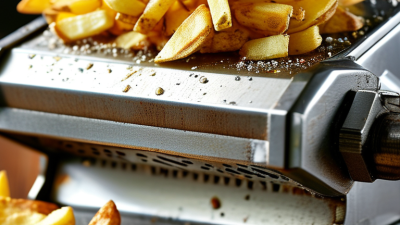
How to Choose a Steel French Fry Cutter?
Choosing a Steel French Fry Cutter is more important than it first appears. A busy kitchen may cut hundreds of potatoes each day, and small design flaws quickly become costly. The National Restaurant Association’s 2024 State of the Restaurant Industry report projected more than $1 trillion in United States restaurant sales. That scale increases pressure on speed, consistency, hygiene, and equipment durability. Grand View Research also reports continued growth in the global foodservice equipment market, with demand driven by efficiency and commercial kitchen modernization.
A reliable cutter should feel stable on the counter, not slide when a potato meets the blade. Its stainless steel frame should resist corrosion, while removable components should allow thorough cleaning. Blade thickness matters too. Thin blades may produce attractive fries but can bend under repeated pressure. Thick blades offer strength, although they may require more cutting force.
Cleanability deserves serious attention. Very serious.
Dr. Benjamin Chapman, a food safety specialist at North Carolina State University, has warned, “You can’t see, smell, or taste the bacteria that can make you sick.” His point applies directly to fry cutters, especially around joints, handles, and blade housings. Hidden potato starch can harden like glue in narrow gaps. A cutter that looks polished may still be difficult to sanitize.
The best Steel French Fry Cutter is not automatically the most expensive model. It should match your volume, potato size, available counter space, and cleaning routine. Price alone can mislead. A thoughtful choice considers daily experience, manufacturer specifications, food-contact materials, and verified customer feedback. This guide examines those details carefully, while admitting one practical truth: no cutter is perfect for every kitchen.
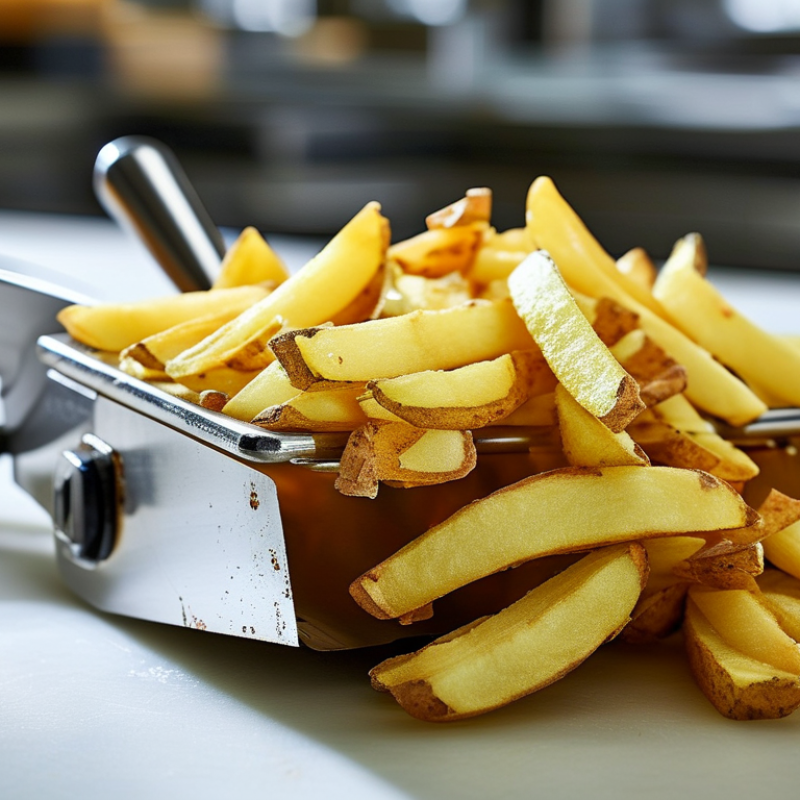
Define Fry Size: Compare Industry-Standard 3/8-Inch and 1/2-Inch Cuts
When choosing a steel French fry cutter, define the fry size before comparing frames, handles, or blade materials. The 3/8-inch cut equals about 9.5 millimeters. The 1/2-inch cut measures about 12.7 millimeters. These dimensions appear in USDA Agricultural Marketing Service specifications for common frozen French-fry formats, so they provide a practical industry reference.
The 3/8-inch grid creates slimmer fries with more exposed surface area. They usually brown faster and develop a crispier bite. The 1/2-inch grid leaves a thicker potato center, often producing a softer interior and a more substantial mouthfeel. My first assumption was that the thinner cut always saved cooking time. Actual results depend on potato moisture, oil temperature, and batch size. Small errors matter.
The National Restaurant Association’s 2024 State of the Restaurant Industry Report projected U.S. restaurant sales above 1 trillion dollars. That scale makes portion consistency a serious operating concern, not a cosmetic detail. A steel cutter should hold its selected grid firmly, resist bending, and allow clean food contact between batches. For high-volume service, 3/8-inch blades may support faster cooking but require closer timing. A 1/2-inch cutter can be more forgiving during holding, although the center may soften. Measure several sample fries with calipers before ordering. It is a simple check, yet many buyers skip it.
How to Choose a Steel French Fry Cutter?
Define fry size by comparing the two common nominal cuts: 3/8 inch and 1/2 inch.
How to read the chart: A 3/8-inch cut produces fries about 9.525 mm wide, while a 1/2-inch cut produces fries about 12.7 mm wide. Because cross-sectional area increases with the square of the width, the 1/2-inch fry has approximately 78% more potato area per piece. Choose 3/8 inch for thinner, crispier fries or 1/2 inch for thicker fries with a more substantial center.
Evaluate Steel Grades: 304 Stainless Steel Contains About 18% Chromium and 8% Nickel
How to Choose a Steel French Fry Cutter?
Steel grade matters when a French fry cutter meets water, salt, starch, and acidic cleaners. According to ASTM A240/A240M, 304 stainless steel typically contains 18–20% chromium and 8–10.5% nickel. The familiar 18/8 description is useful, but it is not an exact certificate. Chromium forms a thin passive oxide layer, while nickel improves corrosion resistance and shaping performance. That chemistry suits repeated kitchen contact.
Look closely at the blades, cutting grid, frame, and fasteners. A cutter can claim stainless construction while using weaker steel in hidden screws. The British Stainless Steel Association’s technical guidance identifies 304 as a common food-processing grade for general service. It also warns that chloride exposure can cause pitting, especially when surfaces stay wet. Small pits may begin around blade joints. I have seen cleaning residue collect there.
Choose smooth welds and rounded internal corners. They reduce trapped potato starch and simplify inspection. The U.S. Food Code emphasizes cleanable, corrosion-resistant food-contact equipment, but it does not make every stainless component equally durable.
That distinction is easy to miss. For heavy daily use, compare the material certificate, not only the product description. Also check whether the cutting grid is replaceable. A thick 304 frame may last years, while a thin blade bends quickly under frozen potatoes. That is an imperfect comparison, because workload and cleaning habits change the result.
Assess Blade Design: Match Blade Count, Sharpness, and Cutting Force to Potato Size
A steel French fry cutter should match blade design to the potato, not just the desired fry shape. FAOSTAT reported about 374 million tonnes of potatoes worldwide in 2022, so size and firmness vary widely by supply region. USDA Agricultural Marketing Service standards classify potatoes by diameter, reinforcing one practical point: a single blade setup cannot perform equally well on every potato.
For large potatoes, choose a robust grid with fewer cutting lanes and wider openings. It produces thicker fries and reduces the sudden force required from the handle. Smaller potatoes can accept more blades, creating slimmer pieces with less waste. Sharp edges matter more than extreme blade count. A dull blade crushes the surface, leaves ragged ends, and demands uncomfortable pressure. Keep the blade frame rigid. Any flex can turn a clean cut into a dangerous slip.
Test the cutter with chilled and room-temperature potatoes. The difference is noticeable. Cold potatoes often resist the first push. Very firm potatoes need leverage, not reckless force. I would also inspect the blade spacing after repeated use; small bends are easy to miss. A useful rule, though imperfect, is simple: thicker potato, wider grid; smaller potato, finer grid. USDA AMS, United States Standards for Grades of Potatoes; FAOSTAT, Crops and Livestock Products Database, 2022.
Check Capacity and Safety: Review Batch Size, Guards, Handles, and Non-Slip Bases
Choosing a steel French fry cutter starts with capacity, not appearance. Measure the potatoes used in your kitchen, including their diameter and average batch weight. A cutter rated for one potato may slow service during lunch rushes. A larger chamber can improve output, but it also demands stronger handles and steadier positioning. Capacity claims are often idealized. Test them with real produce.
Safety deserves equal attention. The U.S. Bureau of Labor Statistics reported 3.6 recordable injury and illness cases per 100 full-time workers in accommodation and food services in 2022. That figure supports a practical question: can staff operate the cutter without placing fingers near the blade? Choose a full hand guard, controlled pusher, and a handle that stays stable under pressure. The U.S. FDA Food Code 2022 also emphasizes smooth, corrosion-resistant, and cleanable food-contact surfaces. Welds, corners, and removable parts should be easy to inspect after each shift.
Check the base carefully. A wide, non-slip base should remain firm on wet stainless steel, not slide during a hard downward push. Rubber feet help, but they can wear or collect residue. Replace them when movement appears. I would also test the cutter with a partially filled chamber, because real workers rarely load equipment perfectly. That small test may reveal awkward leverage, weak guards, or a handle that feels safe only on paper.