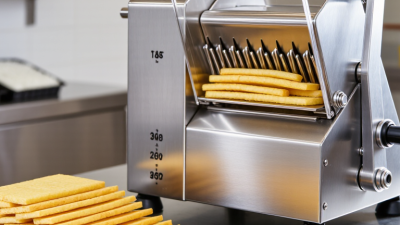
China Top 10 Potato Chips Slicer Cutter Manufacturers
Choosing a reliable Potato Chips Slicer Cutter manufacturer can shape product consistency, kitchen workflow, and maintenance costs. A clean slice matters. It affects frying time, texture, and the finished chip’s appearance. For food businesses, even a small variation in thickness can produce uneven results across a batch.
This guide introduces ten manufacturers serving different production needs, from compact slicers for smaller kitchens to equipment designed for higher-volume operations. It considers practical factors such as blade options, cutting capacity, material quality, cleaning access, spare parts, and after-sales support. These details are more useful than a polished product photo alone. A stainless-steel frame, for example, may be reassuring, but buyers should also ask how blades are replaced and how the machine performs with firm or irregular potatoes.
The list is intended as a starting point, not a universal ranking. Manufacturers differ in product range, customization, service coverage, and documented specifications. Some details may change, so verify current information directly with each supplier before making a purchasing decision. Request clear capacity figures, operating instructions, and maintenance guidance. If possible, examine a sample cut or arrange a demonstration. The right choice depends on your potato variety, target slice thickness, available floor space, and daily output. No machine solves every production problem. Careful comparison helps reveal the trade-offs—and sometimes the overlooked question is how quickly the cutter can be cleaned between runs.
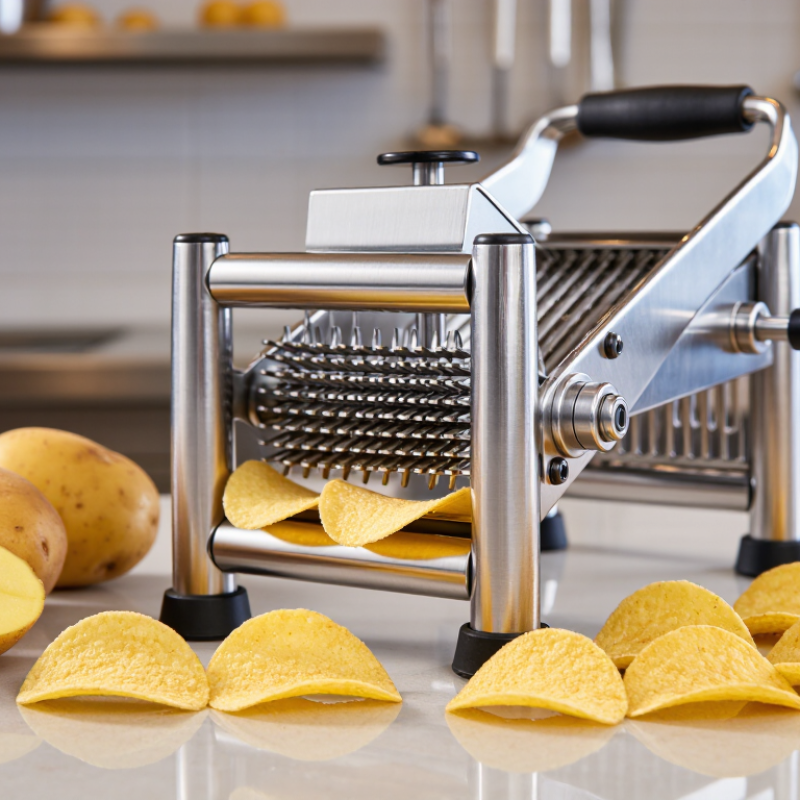
What Defines a Leading Potato Chips Slicer Cutter Manufacturer in China
What Defines a Leading Potato Chips Slicer Cutter Manufacturer in China
A leading potato chips slicer cutter manufacturer is defined by more than its catalog. The machine should produce even slices across a full production run, with adjustable thickness to suit different potato varieties and chip styles. Ask for sample cuts, not just specifications. A close look at the slices can reveal uneven edges, excess breakage, or inconsistent thickness.
Food-contact surfaces, blade access, and cleaning procedures deserve careful attention. Stainless steel construction is useful, but it does not guarantee easy sanitation on its own. Check whether operators can remove and inspect the blade assembly safely. Small details matter. A poorly placed drain or hard-to-reach corner can slow daily cleaning.
Reliable manufacturers also explain capacity in practical terms and make clear which conditions affect output, such as potato size and feed rate. Request a factory test using material similar to yours, and review maintenance instructions and spare-part availability. Some claims may sound precise, yet real production is rarely so tidy. Ask what happens when blades dull or slice quality shifts during a long run. A clear, specific answer is often more useful than a polished brochure.
China Top 10 Potato Chips Slicer Cutter Manufacturers — What Defines a Leading Potato Chips Slicer Cutter Manufacturer in China
| Evaluation Dimension |
What a Leading Manufacturer Should Demonstrate |
Practical Verification |
| 1. Product suitability |
Equipment designed for the buyer’s intended potato-processing stage, production arrangement, and product format. |
Review the machine specification, process flow, and a trial using representative potatoes. |
| 2. Slice consistency |
Adjustable cutting settings and a clear method for checking slice thickness and uniformity. |
Request sample slices and confirm the specified thickness range and inspection method in writing. |
| 3. Capacity information |
Capacity figures stated with their operating conditions, such as product size, feed method, and shift arrangement. |
Ask for the test conditions behind the quoted output and compare them with the intended production line. |
| 4. Food-contact materials |
Clear identification of materials used on product-contact surfaces and documentation relevant to the destination market. |
Check the bill of materials, material certificates where applicable, and local regulatory requirements. |
| 5. Blade design and maintenance |
Accessible blades, defined replacement procedures, and guidance for safe sharpening or replacement. |
Review the maintenance manual and confirm the availability and specifications of replacement blades. |
| 6. Cleaning and hygiene |
Machine features and instructions that support cleaning, inspection, and hygienic operation. |
Inspect the equipment for accessible product-contact areas and review the cleaning procedure before purchase. |
| 7. Operator safety |
Appropriate guarding, emergency-stop provisions, and operating instructions for the machine configuration. |
Review safety documentation and assess the machine against the applicable standards in the buyer’s market. |
| 8. Line integration |
Defined electrical, mechanical, and product-transfer interfaces for connection with upstream and downstream equipment. |
Compare interface drawings and utility requirements with the existing or planned production line. |
| 9. Quality documentation |
Traceable machine specifications, inspection records, manuals, and agreed acceptance criteria. |
Request a document list and confirm that inspection and acceptance checks are included in the purchase agreement. |
| 10. Service and spare parts |
Documented support arrangements, recommended spare parts, and a defined process for technical inquiries. |
Confirm service channels, parts lead-time estimates, warranty terms, and the scope of after-sales support. |
How the Top 10 Chinese Manufacturers Compare by Product Capabilities
China Top 10 Potato Chips Slicer Cutter Manufacturers
A useful comparison of the ten leading Chinese manufacturers starts with product capabilities, not brochure claims. Look at blade adjustment, feeding consistency, and the range of potato sizes each slicer can handle. Some machines suit small batches, while others are designed for continuous production. A clear specification should state slice-thickness ranges, rated output, and the conditions used for testing. Without those details, output figures can be difficult to compare fairly.
Blade design affects more than slice thickness. It can influence edge quality, breakage, and how often operators need to stop for cleaning or replacement. Compare the feeding method, motor control, guarding, and access to food-contact areas. Stainless-steel construction is useful, but the grade and finish should be confirmed rather than assumed. Ask for a demonstration using potatoes similar in size and moisture to your own. Small details matter. No single feature settles the choice, and I would still want to inspect a sample run before deciding.
Tips: Request sample slices at several thickness settings. Check whether the cut stays even across a full batch, not just a few pieces. Compare changeover time and routine blade-maintenance steps. A compact machine may save floor space, but its actual throughput could fall short under steady use. Keep the comparison tied to your product, staffing, and cleaning needs.
Core Technologies Used in Potato Chips Slicing and Cutting Equipment
Potato-chip slicing starts with controlled feeding. A steady infeed aligns tubers and reduces collisions before they reach the cutting head. Rotary impeller slicers use centrifugal force to move potatoes across fixed blades, producing thin, continuous slices. Adjustable blade spacing sets slice thickness, while sharp, food-contact stainless-steel edges help limit tearing. Small changes matter. A worn blade can leave ragged edges and uneven thickness, which may affect frying consistency.
Modern equipment combines variable-speed drives, PLC controls, and sensors that monitor throughput and motor load. Some systems use machine vision to flag irregular slices, though lighting and wet surfaces can complicate inspection. FAOSTAT recorded approximately 374.8 million tonnes of potatoes produced worldwide in 2022, illustrating the scale behind demand for reliable processing equipment. That figure does not prescribe a machine design; product size, target thickness, and line capacity still guide selection. Operators should check slice uniformity with routine samples and inspect blades during scheduled maintenance. Automation helps, but it cannot compensate for poor setup. Even a well-built slicer needs careful adjustment.
Key Factors for Evaluating Quality, Safety, and Production Efficiency
When comparing China’s potato chips slicer cutter manufacturers, look beyond cutting speed. Ask for sample slices made from potatoes similar in size and firmness to yours. Check thickness consistency across a batch, not just one attractive piece. A clean cut matters. Uneven slices can fry at different rates, affecting color, texture, and waste.
Safety and sanitation deserve close inspection. Request clear information about guards, emergency stops, and how operators access blades during cleaning. Food-contact surfaces should be corrosion-resistant and easy to wash, with few hard-to-reach corners. Ask how often blades need replacement and whether routine adjustments require special tools. Practical answers are more useful than broad claims. If possible, review the machine running and observe how scraps and moisture are handled.
Production efficiency depends on more than the advertised output per hour. Compare actual throughput with your potato size, feeding method, and planned shift length. Check whether the cutter connects smoothly with washing, peeling, and frying equipment. Ask for operating instructions, spare-part availability, and realistic maintenance intervals. These details can reveal the likely downtime burden. A checklist still has limits; factory conditions and operator skill can change results. Record test settings and slice measurements before choosing a supplier.
How to Choose the Right Chinese Potato Chips Slicer Cutter Manufacturer
China Top 10 Potato Chips Slicer Cutter Manufacturers
How to Choose the Right Chinese Potato Chips Slicer Cutter Manufacturer
Comparing the top ten manufacturers should begin with your production needs, not online rankings. Confirm daily output, potato size, slice thickness, and available power before contacting suppliers. A machine for a small snack shop differs greatly from one processing several tons daily.
Ask for food-contact material certificates, electrical test reports, and clear machine specifications. Stainless steel construction is useful, but the grade and thickness matter. Check blade hardness, replacement cost, cutting accuracy, and cleaning access. Request a video using potatoes similar to yours. Better still, send samples for a cutting test.
Inspect the factory’s quality process, welding details, control cabinet, and final testing records. Reliable manufacturers explain tolerances instead of promising perfect results. They should provide installation guidance, spare parts, operating manuals, and responsive after-sales support. Confirm packaging, delivery terms, warranty coverage, and technician availability in writing.
Look beyond the lowest quotation. A cheaper cutter may create uneven slices, higher waste, or frequent downtime. No checklist is perfect. Even experienced buyers can overlook local voltage, water access, or operator training. Ask practical questions, compare evidence, and choose a supplier whose answers remain consistent from sales discussion to factory inspection.
China Potato Chips Slicer Cutter Manufacturers: Buyer Evaluation Priorities
This non-company-specific benchmark shows how buyers can weight the main criteria when selecting a Chinese potato chips slicer cutter manufacturer. Compliance, cutting performance, and production capacity receive the highest emphasis because they directly affect food safety, product consistency, and operating efficiency.
Evaluation framework: Use these percentage weights to compare suppliers consistently, then verify each supplier’s technical documents, food-contact materials, test results, production capacity, warranty terms, and after-sales support.