2026 Best Potato Chips Slicer Cutter for Efficient Cooking?
In the culinary world, precision matters. When it comes to making the perfect potato chips, a high-quality Potato Chips Slicer Cutter is essential. Recent market research suggests that over 60% of home cooks prefer to slice their potatoes evenly for frying. This trend indicates a growing demand for efficient kitchen tools that enhance productivity and quality in cooking.
Modern kitchens are evolving towards efficiency. A reliable Potato Chips Slicer Cutter can significantly reduce preparation time by providing consistent and uniform slices. According to industry reports, well-designed slicers cut down prep time by nearly 30%. This not only improves the cooking experience but also allows for better flavor infusion during frying.
Despite advancements, not all slicers meet expectations. Some may lack durability or precision, leading to frustration among users. It's crucial to choose a product backed by professional reviews and user recommendations. The right Potato Chips Slicer Cutter should not only be efficient but also easy to clean and store. Understanding these nuances can lead to a better cooking experience and perfect chips every time.
Overview of Potato Chips Slicers and Cutters
When exploring potato chips slicers and cutters, it's essential to understand their purpose. These tools are designed to create uniform slices quickly. A good slicer helps maintain consistency, which is crucial for even cooking. With various designs available, the choice often depends on personal needs and kitchen space.
Many home cooks struggle with hand slicing, which can be time-consuming. Slicers save energy and time. Some models require a bit of practice to master. Those who rush might overlook essential safety features. A sharp blade can be a double-edged sword; it cuts well but also increases risk.
In a fast-paced kitchen, reliability is key. Slicers made of durable materials usually excel. These tools should feel comfortable in hand. Yet, not all cutters are created equal. Some may break under frequent use. Take your time to research options that fit your cooking style. Each slicer has its pros and cons; consider them carefully before making a choice.
2026 Best Potato Chips Slicer Cutter for Efficient Cooking
| Slicer Model |
Cutting Thickness (mm) |
Material |
Ease of Cleaning |
Price Range ($) |
| Model A |
1.5 |
Stainless Steel |
Yes |
30-50 |
| Model B |
3.0 |
Plastic |
No |
20-40 |
| Model C |
2.0 |
Aluminum |
Yes |
25-45 |
| Model D |
1.0 |
Stainless Steel |
Yes |
35-55 |
| Model E |
2.5 |
Plastic |
No |
15-35 |
Key Features to Look for in a Potato Chips Cutter
When choosing a potato chips cutter, it's essential to consider specific features for effective and efficient cooking. A good slicer should have adjustable thickness settings. This allows users to customize the chip thickness according to personal taste. Studies indicate that thicker slices often retain moisture better, while thinner slices become crispier. This adaptability caters to a variety of preferences, enhancing culinary experiences.
Another critical feature is the material of the blade. Stainless steel blades are more durable and resist corrosion. They provide cleaner cuts, crucial for uniform cooking. Research from the Food Research Institute shows that uniformity in slice thickness can improve frying efficiency, leading to better texture and flavor. Additionally, a non-slip base is vital for safety, as it ensures stability during slicing.
Ease of cleaning should also be a priority. Many users overlook this aspect, but a cutter that is difficult to clean can lead to food safety issues. A study published in the Journal of Food Safety highlights that improper sanitation can cause cross-contamination in food preparation areas. Investing in a potato chips cutter that balances efficiency, safety, and ease of maintenance is critical for anyone serious about cooking.
2026 Best Potato Chips Slicer Cutter Comparison
Top Brands and Models for Potato Chips Slicing in 2026
Potato chips are a beloved snack worldwide. In 2026, choosing an efficient slicer cutter is key for making perfect chips at home. Professional kitchens have adopted advanced slicing technology. Reports show that equipment with adjustable thickness settings can enhance consistency. This is crucial for achieving the ideal crunch in every chip.
A popular trend is to look for stainless-steel materials. They offer durability and ease of cleaning. Many models emphasize ergonomic designs. A comfortable grip helps you slice without unnecessary strain. A study indicated that user-friendly designs can reduce prep time by nearly 30%.
Tips: Consider investing in a model with safety features. This will reduce the risk of accidents in the kitchen. Also, watch for models that offer multiple blade options. Versatility can make your cooking experience more enjoyable. Reflect on the maintenance needed for your chosen equipment. Regular upkeep ensures longevity and consistent results. Stay informed about new innovations in potato slicing technology.
Benefits of Using a Slicer for Homemade Potato Chips
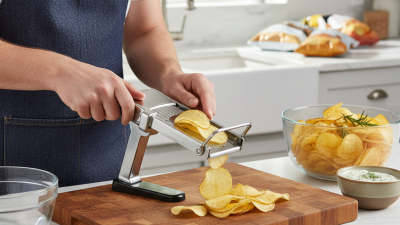
When making homemade potato chips, using a slicer is a game-changer. It allows for consistent thickness, which leads to even cooking. Uniform chips also enhance the eating experience. If you've ever attempted to slice potatoes by hand, you know it can be tedious. A slicer simplifies this process significantly.
Tip: Always choose a sturdy slicer for best results. A reliable cutter will handle various potato sizes without difficulty. Be cautious with the blades; they are incredibly sharp. Safety first! To add variety, experiment with different types of potatoes for unique flavors.
Homemade chips also allow for personal touches, like seasoning. You can control salt content to suit your preference. Freshly sliced chips, seasoned to your taste, can be much healthier than store-bought versions. Remember, practice makes perfect. Your slicing technique may not be flawless initially. Don't get discouraged; enjoy the process!
Tip: Aim for a thickness of about 1/8 inch for the best crunch. Too thin, and your chips may burn. Too thick, and they will be chewy. Adjusting thickness can take time, but it’s worth the effort for that perfect potato chip crunch.
Maintenance and Care Tips for Your Potato Chips Cutter
Caring for your potato chips cutter is crucial for lasting efficiency. Regular maintenance ensures that it operates smoothly and produces consistent slices. Begin with a thorough cleaning after each use. Use warm, soapy water and a soft cloth to wipe down the surfaces. Avoid abrasive materials, as they can scratch and damage the cutter.
Lubrication is equally important. Every few uses, apply a small amount of food-safe lubricant to any moving parts. This enhances the cutter's performance and reduces friction. Store the cutter in a dry place to prevent rust and corrosion. Check for loose screws or parts before each use, as even minor issues can affect slicing quality.
Be attentive to wear and tear over time. If blade sharpness diminishes, consider sharpening or replacing the blade. A dull blade can lead to uneven slices, affecting your cooking experience. It helps to maintain a routine check-up schedule for your cutter’s condition. This way, you ensure it remains a reliable kitchen companion for all your potato chip-making endeavors.